a&r · music business · music industry · Music2Deal.com · This & That

AI Will Not Replace Creativity. It Will Redefine How We Create.

Every technological revolution in music has been accompanied by the same question:

“Will this replace musicians?”

Today, the debate revolves around Artificial Intelligence. Thirty years ago, it was about digital samplers. Before that, it was synthesizers, drum machines and digital recording.

History has shown us something interesting: technology rarely replaces creativity. Instead, it changes the way we express it.
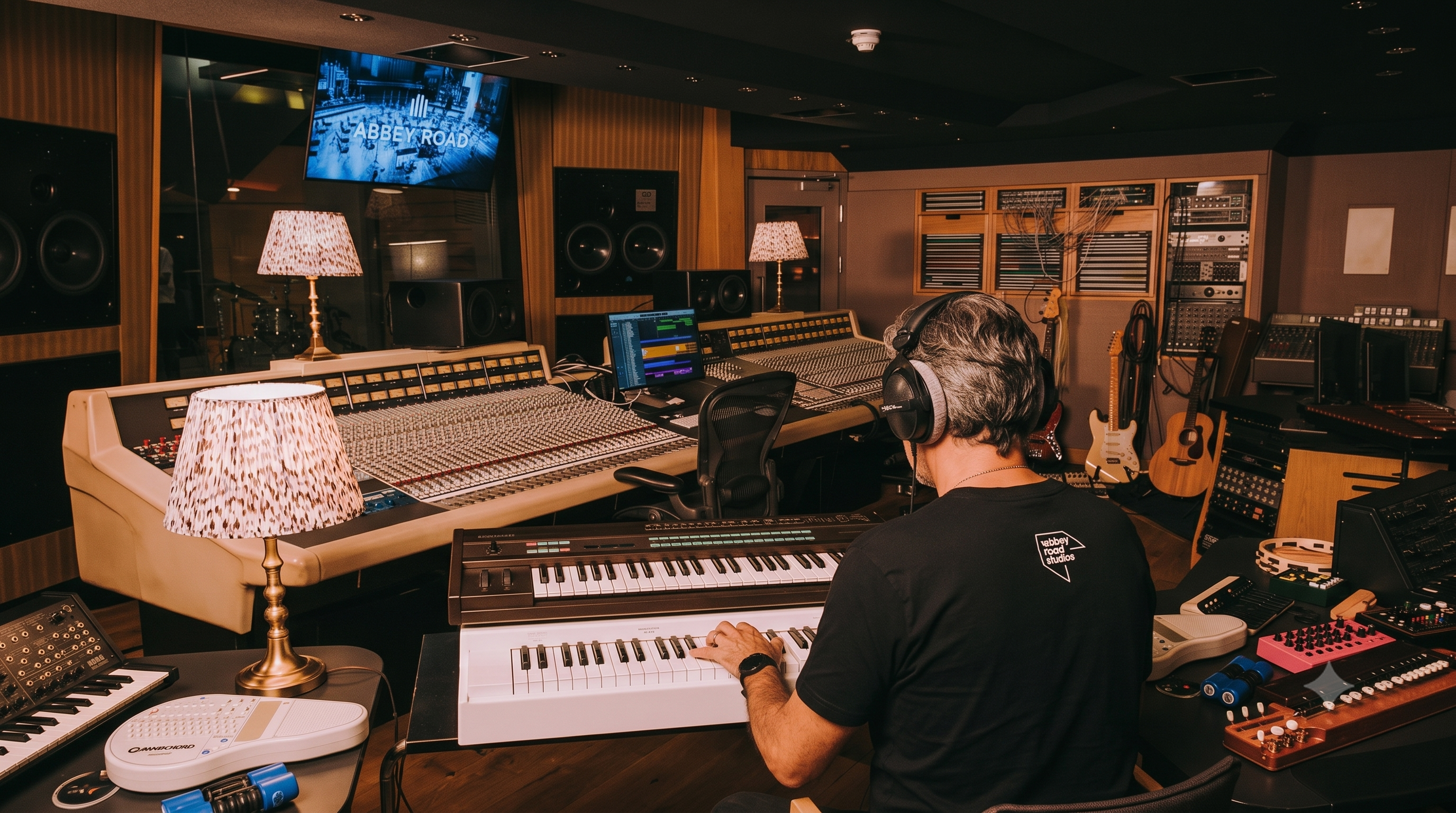
Early in my career, I worked as a sound designer for companies such as Angel City Audio and Valhala, creating sound libraries and sample collections for Korg and Roland instruments. At the time, many believed that sampling technology would make musicians obsolete.

It didn’t.

The opposite happened.

It gave producers, composers and musicians new creative possibilities while preserving what has always mattered most: artistic vision.

Later, while producing orchestral soundtracks for television, including projects for Brazil’s TV Globo such as Hilda Furacão, we combined digital samplers with real orchestras and live musicians. Technology became part of the creative process, not a substitute for it.

Today, AI represents another extraordinary leap forward.

Independent creators now have access to production tools that were once available only in world-class recording studios. That is a remarkable democratization of music production.

But access to technology has never been the same as artistic identity.

Artificial Intelligence can suggest harmonies, generate arrangements, create sounds and even produce complete tracks.

What it cannot replace is the artistic intention behind every creative decision.

The personality of an artist is not found in the software they use.

It is found in their choices.

In their taste.

In their cultural references.

In the emotions they decide to communicate.

This is why I believe AI should be embraced as a creative partner rather than a creative replacement.

A good example is the growing number of artists who deliberately choose to combine modern production techniques with live performances to create distinctive sonic identities. The goal is not to reject technology but to use it intentionally, ensuring that every artistic decision reflects a unique creative vision rather than simply accepting the first result generated by an algorithm.

The real challenge for today’s creators is no longer learning how to use AI.

It is learning how to remain recognizable in a world where everyone has access to the same tools.

Because audiences rarely connect with technology.

They connect with authenticity.

As the music industry continues to evolve, our greatest competitive advantage will not be the software we use.

It will be our ability to transform technology into something deeply human.

Technology will continue to evolve.

Creativity will continue to define us.

How do you use AI in your creative process?
Do you see it primarily as a creative assistant, a production tool, or something that could fundamentally change the role of composers and producers? I’d love to hear your perspective and continue this conversation with the Music2Deal community.

→ View profile on Music2Deal: https://music2deal.com/br/danielsilveiramusica

Join for free and become part of the international Music Business Network:

https://www.music2deal.com/site/register

Interviews · music business · music industry interview · Music2Deal.com

Eurovision: why should songwriters care?

LeaHy is a songwriter, lyricist, and long-standing Music2Deal member with an international perspective on the music business. Over the years, he has written for acts such as 2 Unlimited and CB Milton and collaborated with various artists across Europe. With his deep knowledge of both the creative and business sides of music, LeaHy brings valuable insights into how songwriters can view opportunities like the Eurovision. In this interview, he shares his personal experience, perspectives, and advice for anyone curious about writing for one of the world’s biggest music stages.

You opened a forum on Music2Deal about the Eurovision. What prompted you?

Like many people my age, I have memories of watching the Eurovision as a family – at the time there were not many channels and so not much choice on TV.

Much later, I wrote for 2 Unlimited, CB Milton and others. So you could also say that I’m not scared of pop. I also submitted songs twice. Both fell at the first hurdle – no regrets. But the only people actually debating Eurovision are the hyperfans; songwriters don’t actually talk about Eurovision much.

That’s why I created the forum on Music2Deal (see below).

Who runs the Eurovision?

The Eurovision is run by the European Broadcasters Union – a body that manages supernational sports and TV events for its members, national TV stations. Any station can join, which explains why Australia, Israel and Turkiye are members and can participate and send in their candidates.

Question from a colleague: Why has Eurovision deteriorated so badly?

It’s worth talking about this. On the one hand, it you turn down the volume of your TV set, Eurovision has never been this good. The staging – and very often the choreographies – are among the best you will see anywhere in the world. Plus, the audience continues to grow.

But then there is the music. And that is more… complex. I wish more broadcasters would remember that it’s the Eurovision SONG contest. There is a very strong temptation for them to aim at the spectacle: larger-than-life singers; fake “catchy” choruses; and lots of flesh. So you get a lot of gimmicky acts. They definitely appeal to the live crowd, but they don’t build careers.

But that leads to another point: more than anything else, the Eurovision is a massive TV event whose job is to get people to turn the TV sets on. Their brief is not to create stars, and don’t forget that many of the performers are technically amateurs.

If you have the patience, there are nonetheless still some great songs and performances each year.

What does it take to write a Eurovision song?

Every year, you can see there are a bunch of people (and broadcasters) that figure it’s easy. Churning out music has never been that hard. Creating a potential hit is hard. My personal favourite of the past few years, “Tattoo” by Loreen (Sweden), had six writers, 30 musicians and one of the best vocalists in Europe. And there is not one note or word too many on the track. That’s your competition if you’re aiming for the top level.

There is much talk of the Eurovision formula. If I knew of one that worked, I’d create an app and sell it! One thing I would say that not many people talk about is that songs that catch people’s attention are often very authentic, for want of a better word. The storytelling aspect is important. This could be a “little guy just there for the laughs” to the sympathy vote for Ukraine or the block voting for Israel last year. If you can convince enough people that it’s important to you, a large number will follow you.

How much money can writers earn with Eurovision?
Let’s imagine that you get as far the semi-finals. By now you have earned a couple of thousand euros for airplay and streams. There’s a strong possibility that you will have spent far more than that on studios, session musicians, a good mix and haircuts 😉. Let’s say that you get to the finals and you get some moderate international airplay and streams. Then you’re looking at between €15-50,000. For top five finalists, think about €50-170,000. For the number one winner that goes on to catch people’s attention (not all of them do), you can start at €175,000 and the sky is the limit. As someone noted in other circumstances, “The winner takes it all”. Bear in mind that you will be sharing this money with the broadcaster and then dividing the rest between your co-writers.

How do I write for Eurovision?

As Eurovision is run by national TV stations, you’ll have to go through their submission process. Many require that all the writers and performers be from their country. Others require at least one person be from that country, while some do not specify any constraints.

Now for the reality check: an amazing 10,000 songs are submitted overall per year. Around 300 will make it to the local finals and some 30 or so will compete in the final finals.

The biggest countries obviously receive the most songs. So if you want to increase your chances mathematically, target smaller countries. But I really do recommend having some sort of local connection, be it a writer or a singer. If you get selected, check the contracts closely. Some will require that the writers and performers cover transport and other costs!

Whatever happens, take it as a learning experience and have fun. If you have a great song that needs lyrics, get in touch.

https://www.music2deal.com/groups/Eurovision

https://a-lyric.com
https://3hatsmusic.com
LeaHy´s Profil on Music2Deal

music business · music industry · Music2Deal.com

Michel Zgarka (Ambassador of Music2Deal) is talking about Hitlab

Michel Zgarka, President – HITLAB

Within the next few weeks HITLAB will launch an international Digital Emerging Artist Competition (DEAC) in partnership with some of the leading companies of the music industry including streamers, telcos, labels. Multi-platforms and our major multi-talented shareholder AKON.

In spite of large investments in the industry, artificial Intelligence in music is still underdeveloped, but it does absolutely have the potential to transform A&R.  At least, that’s what HITLAB – a company quietly making in-roads in this field – is suggesting.

The Montreal-headquartered digital media and artificial intelligence company claims to be ‘revolutionizing the way entertainment content is discovered, produced and consumed’.

The company’s Music Digital Nuance Analysis (DNA) tool is a patented technology that the company claims is able to predict the potential success of new and unknown songs and recommend playlists to music fans.

“WE are A MAJOR TOOL FOR AI-DRIVEN A&R AND EMERGING TALENT DISCOVERY.” 

MICHEL ZGARKA, HITLAB

“Our patented AI powered tech uses “musical pattern extraction and state of the art signal processing to isolate music attributes and transform them into quantifiable mathematical equations”.

What this means is that the software is enabled to create unique signatures for each song (which consists of 83 parameters, according to studies HITLAB had done by universities) and then, by mining the data, DNA can find songs that hold similar signatures.

Hitlab’s recommendation’s system’s conclusions are based on actual sound attributes – as opposed to other systems, which use metadata.

How this works in practice, explains HITAB President Michel Zgarka is that the company’s algorithms can identify what a Top 100 song is in any given country, or “whatever type [of song] we feed the machine”.

“It will compare any song that is presented by a songwriter or a producer, and they’ll be able to get a rating quickly of that song against whatever information we have, or data available, to compare it with,” he explains.

“It will rate that song and the producer will be able to fine tune their song to get better ratings, and they’ll know where they stand as an opportunity.

“So this could be done very quickly and it provides an opportunity for producers, or publishers or so on, to quickly identify a series of songs that could be successful in one list or another.”

HITLAB has also developed a mobile application called Can-U-Sing (CUS), a vocal scoring app that allows users to sing well-known songs and see how well their version stacks up against the original.

The app uses patent pending vocal analysis technology, and according to the promo video (see below), evaluates musical elements like the ability to hold rhythm, melodic precision and vocal technique.

The promo video also states that “recordings can be submitted to contests where singers can win cool prizes and,” – now this is where it gets really interesting – “get noticed by major record labels“.

“The innovative technology used in Can-U-Sing makes it a fantastic audition tool for singing competitions, eliminating the need for costly physical auditions,” writes HITLAB on its website.

In terms of real life implementation of its tech, one case study HITLAB lists on its website is a partnership with the Boston Red Sox, which resulted in the ‘CanUSing Your Way to Fenway Park’ contest, which offered the winner the chance to sing the national anthem at the stadium.

Finalists and the winner were chosen by collecting recordings and filtering performances using HITLAB’s app.

In April last year, HITLAB Media, a subsidiary of HITLAB Inc., signed a long-term co-development and co-production deal with Paris-based production company, WeMake, which is a division of France’s Federation Entertainment.

The partnership will see WeMake and Hitlab jointly produce an ‘original format’ project with the working title ‘Man vs The machine’ – The ‘machine’ being HITLAB’s patented and Patent Pending technology CanUSing and DNA tech.

“We are extremely excited to be able to provide proprietary technologies that can revolutionize the way labels and artists interact with their fan base, as well as the discovery process of new talent.

“Furthermore, our technologies have the possibility to be integrated in different segments of the entertainment industry and we are looking forward to explore the TV market as well, as HITLAB develops international properties for both the theatrical and broadcast media.”

Looking to the future, Zgarka  states that HITLAB wants “to be a major tool for AI driven A&R,” and suggests that its software can help A&R professionals, rather than render them obsolete.

“We are a service provider, We don’t want to replace the human,” insists Zgarka.

“With our AI, instead of having to listen to 1,000 songs or more a year, we can [analyse] 100,000 in 1 hour, which will be [cut] down to maybe 100 – making sure I get the cream of the crop.”

Links:

Michael Zgarka on Music2Deal

Home