Every technological revolution in music has been accompanied by the same question:
“Will this replace musicians?”
Today, the debate revolves around Artificial Intelligence. Thirty years ago, it was about digital samplers. Before that, it was synthesizers, drum machines and digital recording.
History has shown us something interesting: technology rarely replaces creativity. Instead, it changes the way we express it.
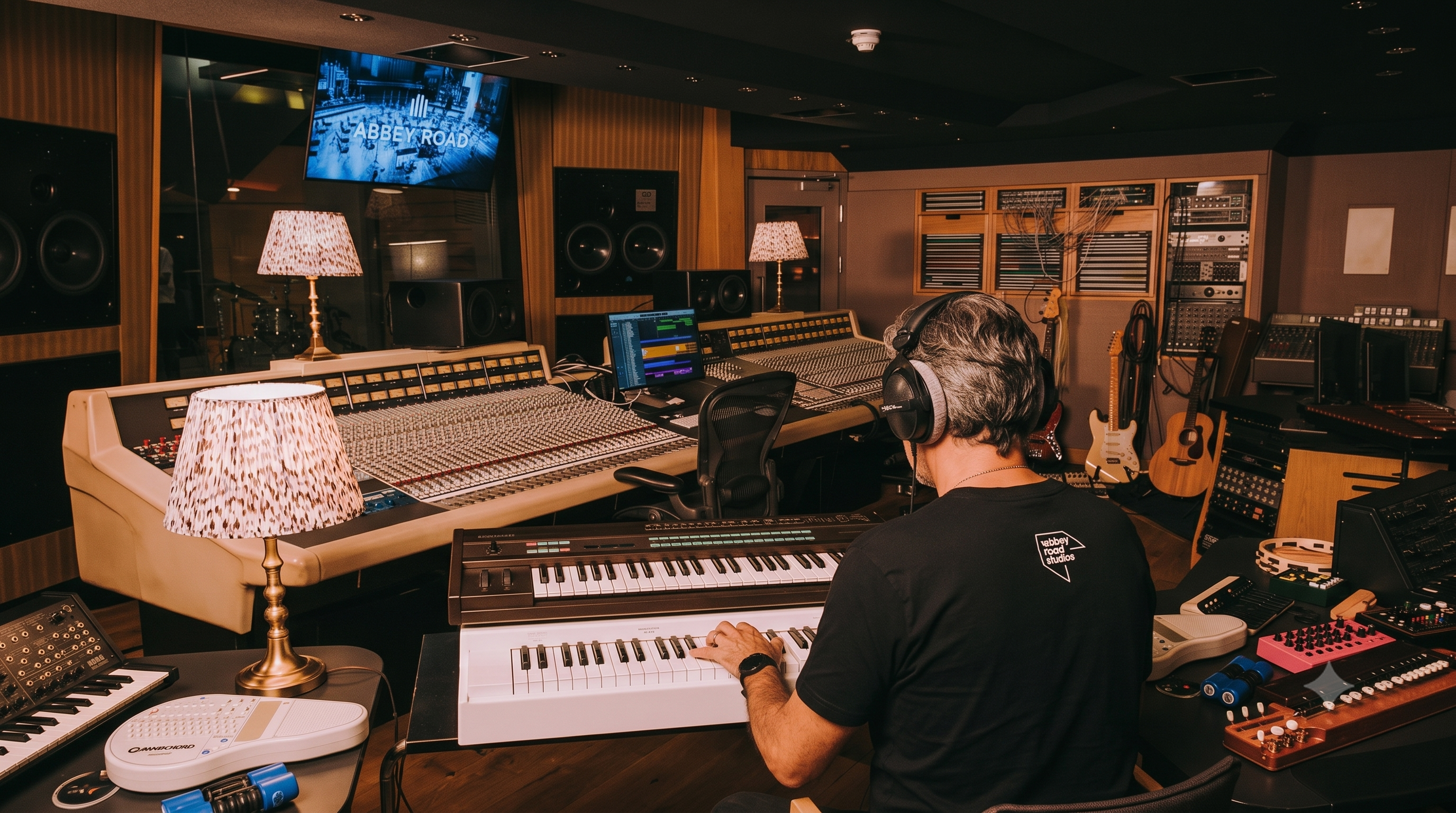
Early in my career, I worked as a sound designer for companies such as Angel City Audio and Valhala, creating sound libraries and sample collections for Korg and Roland instruments. At the time, many believed that sampling technology would make musicians obsolete.
It didn’t.
The opposite happened.
It gave producers, composers and musicians new creative possibilities while preserving what has always mattered most: artistic vision.
Later, while producing orchestral soundtracks for television, including projects for Brazil’s TV Globo such as Hilda Furacão, we combined digital samplers with real orchestras and live musicians. Technology became part of the creative process, not a substitute for it.
Today, AI represents another extraordinary leap forward.
Independent creators now have access to production tools that were once available only in world-class recording studios. That is a remarkable democratization of music production.
But access to technology has never been the same as artistic identity.
Artificial Intelligence can suggest harmonies, generate arrangements, create sounds and even produce complete tracks.
What it cannot replace is the artistic intention behind every creative decision.
The personality of an artist is not found in the software they use.
It is found in their choices.
In their taste.
In their cultural references.
In the emotions they decide to communicate.
This is why I believe AI should be embraced as a creative partner rather than a creative replacement.
A good example is the growing number of artists who deliberately choose to combine modern production techniques with live performances to create distinctive sonic identities. The goal is not to reject technology but to use it intentionally, ensuring that every artistic decision reflects a unique creative vision rather than simply accepting the first result generated by an algorithm.
The real challenge for today’s creators is no longer learning how to use AI.
It is learning how to remain recognizable in a world where everyone has access to the same tools.
Because audiences rarely connect with technology.
They connect with authenticity.
As the music industry continues to evolve, our greatest competitive advantage will not be the software we use.
It will be our ability to transform technology into something deeply human.
Technology will continue to evolve.
Creativity will continue to define us.
How do you use AI in your creative process?
Do you see it primarily as a creative assistant, a production tool, or something that could fundamentally change the role of composers and producers? I’d love to hear your perspective and continue this conversation with the Music2Deal community.
→ View profile on Music2Deal: https://music2deal.com/br/danielsilveiramusica
Join for free and become part of the international Music Business Network:

 The Music2Deal Blog
Hello, I completely agree; AI gives me access to a production tool I otherwise wouldn’t be able to afford, but I remain the creative decision-maker throughout the entire process—from the lyrics and melody to the arrangements. In fact, a friend called me the other day to say he recognized my signature style in a pop song I wrote and composed that features a young female AI voice.
My latest album “D’ombre et de lumière” is entirely produced using AI, but I am the singer, lyricist, composer…
My primary work tools are always my guitar, my writing notebook, and my pencil…
Thanks for sharing your vision. I’d love to hear your music.
Thanks for your interest, here’s my website Musique folk Bretagne Morbihan | Steph Buhé
And you can listen on all stream platforms https://www.youtube.com/playlist?list=OLAK5uy_kCIUZH6FZ2nyEG9a7nkywC7LNtOZIsjVU
Great read. I think the key point is that AI will not replace creativity, but it will expose the difference between real creative identity and generic output.
The tools can help build a demo, shape an arrangement, or open new production doors, but the human still has to bring the story, the taste, the emotional reason, and the final choices.
For songwriters, that means the challenge is not simply using AI. The challenge is making sure the song still sounds like it came from a life, not just a prompt.
That is where melody, lyric, rhythm, and honest storytelling still matter most.
I completely agree. Art requires soul—the raw, human energy that separates creation from mere generation. At the end of the day, ordering a meal doesn’t make you a chef, and prompting isn’t the same as creating.