English · Interviews

Interview with Marc Friedman – Entertainment Lawyer South Africa

Antionette Cronje, Music2Deal representative (South Africa), asked Marc Friedman some questions regarding issues, such as copyright, publishing, licencing, needletime and how these issues are addressed in South Africa.

 If you want more detail on any of the questions below, you can contact Marc on Music2Deal at the following link: http://bit.ly/RWkh3e

 What advice can you give songwriters when they’re approach with a publishing deal for a song? What is the most critical point to look out for in a publishing contract?

 The most important aspects are the TERM OF THE DEAL and the SHARE OF REVENUE.  Sometimes publishers will present a deal that expects the composer to assign the composition for the life of copyright.  This is not the industry standard anymore; anyone can usually negotiate that the terms if for 3 to 5 years with a retention period in certain instances.  Also the revenue shares needn’t necessarily be 50/50, depending on the status of the composer and the level of effort on the part of the publisher, i.e. where the publisher is more active, they will expect a bigger share of the revenue.

What are the possible pitfalls when an artist has been approach for synch licensing deal?

Does the licensee want the piece of music in an exclusive or non-exclusive basis?  If exclusive, one should ask for a very large fee, one should never have to assign the work and should look out for words such as “BUY YOU OUT”, which suggest an assignment.  One should also ask that once can still earn public performance royalties and that the Licensee will fill out cue sheets to enable this.

Why do some publishers, who have a music catalogue or library, want to change the name of the songs, when an artist signs a publishing deal with them?

You would have to check with the publisher on this point, but it could be to try and distinguish them from similar hits with a similar or identical title.

How does changing the name of the song by the publisher of a music library impact the songwriter?

There shouldn’t be an effect of this, provided any collection society is appraised of this change to avoid confusion.

To qualify for live performance royalties, a band has to complete a live performance royalty form and submit it to SAMRO. If 3 of the band members are new to the band and are not registered as songwriters of the songs performed live, are they entitled to live performance royalties?

SAMRO (the South African Music Right Organisation) would have to clarify this, but I suspect they are entitled to collect these royalties, but the fact that they are not registered is an administrative issue for SAMRO and that these royalties may be able to be held by SAMRO until they are registered.

If an artist wants to record a cover of a chart topping hit, does he/she need to get permission from the original artist?

No.  The South African Copyright Act makes provision for a compulsory mechanical license in respect of any song previously recorded in South Africa.  This is provided that it is an identical cover.  If one changes any word, music or structure, one needs permission.

In short, what is needle time and when does an artist qualify for needle time?

Needletime is the public performance royalty, which is paid when a recording is played in public, i.e. on the radio, at a venue etc.  Needletime has always been in our Copyright Act, but has not been practiced for a number of years.  About a decade ago, it was agreed that this would be re-introduced in South Africa, but the broadcasters and music industry are still haggling over what rates should be paid by the broadcasters for the use, so it is not being paid yet.  The general sentiment is that the needletime on any recording should be shared equally between the copyright owner (who paid for it) and performers who participated in the recording.

Who owns the mechanical rights to a song?

Copyright in South Africa vests in the party who wrote it.  The mechanical right (i.e. the right to allow the song to be recorded or reproduced is just one of the rights that copyright reserves for the owner).  Copyright sits with the composer, unless it is assigned to another party in writing.

If band XYZ wants to record a song for their album and the song was offered to XYZ for re-recording by the original songwriter (who is not a member of the band), does the band have to pay any set fee for re-recording the song?

The agreed mechanical royalty rate is 6.76 % of the PPD price of a CD, although models are developing for the digital industry, where rates are often calculated on the retain price (rather than PPD, which is the wholesale price)

When entering an agreement with a management company, what percentage of the band’s income can the band expect to part with?

This would depend on the nature of the relationship (what the manager does), the status of the manager and the band, but I would say it could be in a range from 15 – 25 % with a further debate as to whether this is calculated on gross (the amount payable to the band) or net (once expenses have been deducted).

Interviewed by Antionette Cronje
 

English · This & That

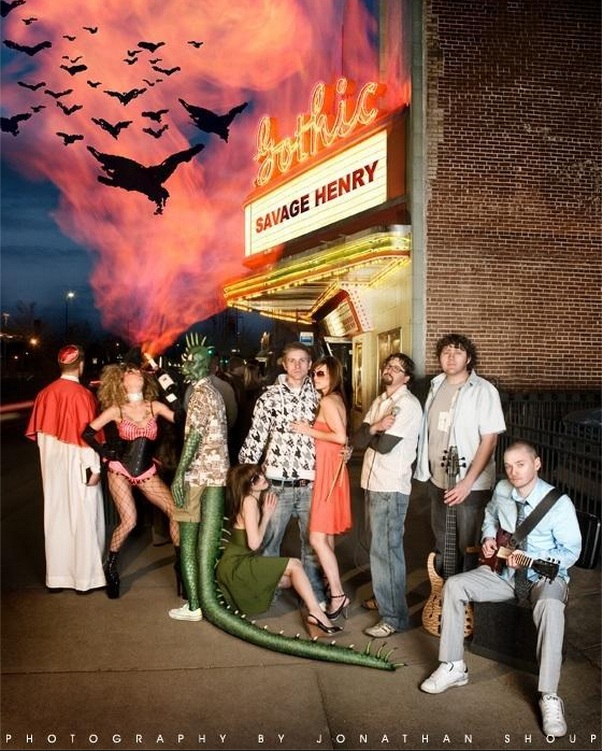
Getting To Know ‘Savage Henry’

“We were on tour in the Midwest USA in summer 2009. The guys decided to go get some breakfast and mess around town that day, do some shopping. The driver of the bus missed his exit on the highway, needed to get turned around, switched lanes and didn’t see this HUGE Fed Ex truck in the other lane and well, bam!” When Hal Jester, Manager of ‘Savage Henry’, talks about this sad day, he still can’t believe what happened. This is when the song “300 Miles” was written, which deals with the guy’s experiences on the road over the years. “The video picks up where this story left off and the aftermath. The first minute of the video features real news footage. The guys were all OK except for some bumps and bruises but the driver of the bus was injured severely and had to stay in the hospital for a couple of weeks. We felt very bad about the incident.”

 Savage Henry was formed in Denver, CO, July 2004. They released their first full length recording of fourteen songs, All In, at the legendary Red Rocks Amphitheater in August 2005. Named Band to Watch in 2005 by Xposure Magazine, they have performed over a hundred live shows for fans throughout Colorado, Nebraska, Iowa, South Dakota, Wyoming and Minnesota and have been featured on Colorado radio stations including 93.3 KTCL and 99.5 The Mountain. The CD, All In and Step Lively, can be found on several major music services including iTunes, Amazon, and CDBaby. Savage Henry immediately gained regional respect with their 2005 debut effort All In, an audio journal of the complexities of relationships pushing against the tide of temptation and self-realization. All In was recognized as one the year’s most skillfully played and cleanly produced albums by Denver’s alternative weekly publication, Westword.

By the end of 2006, Savage Henry picked up a nomination for a Westword Music Showcase Award in the Best Rock category, and then again in 2007, this time in the Best Pop category alongside recent Atlantic signing, Meese.

The members of Savage Henry understand that success in the music industry is more than just skillful albums and blistering live performances, so Savage Henry is an efficient business machine. Stuart Miller is a career guitar player living music through performing, teaching, and publishing placements, and is highly esteemed for his session work. In addition to maintaining the band’s website and promotion online, bassist John Jeffers has earned praise for his skills in sound engineering and recording. Singer Damon Guerrasio’s background in theater brings a unique, one of a kind performance, keeping the crowds rolling in. As a part of the successful “On Second Thought” (until their demise in 2004), Guerrasio has reached his artistic pinnacle as the intricate lyricist and eccentric frontman of Savage Henry. With regular touring, festival, and showcase performances, along with highly acclaimed Pink Floyd tribute shows (Wish We Were Floyd), Savage Henry continues to prove itself as an independent musical success. As shows regularly sell out in Colorado, Savage Henry has also developed sizeable followings in Nebraska, Minnesota, South Dakota and Wyoming.

The band will consider any offers for licensing, record label interest and especially radio airplay on any station across the world. Savage Henry has two excellent CD’s with great packaging and presentation and digital distribution in place.

“However we have no hard copy distribution in place at this time, so that’s something the band may need help with. We need help paying for our hard copy CD’s which are complete with a great package. We were hoping to start selling on the radio. People would buy our tunes online then from those sales we could order more hard copies but we still don’t have a way to get them in Target and Walmart and other retailers. A matter of fact the band was offered a “trial run” 3 years ago from Universal Records. They wanted 1,000 CD’s up front from us to distribute to a few Target stores to see how we would sell. We didn’t have the funds to purchase that many CD’s. So you can see that we have the talent and “big” labels have showed their interest in this band…just bad timing or the wrong type of offer.”

– Hal Jester

Savage Henry on Music2Deal: http://bit.ly/QZLjaZ

Savage Henry on Reverbnation: www.reverbnation.com/savagehenry

English · Tips

Tips & Tricks – Sending A Demo (Part 2)

Click here to read “Tips & Tricks – Sending A Demo (Part 1)”

4)     Be clear and correct. If you are using a bad grammar in your text (CV, biography, etc..) you will probably not impress anyone, in addition to this if you say that you speak that language in your bio, then you will not be credible. If you can not do it, then get help. A demo does not need to be done alone. Build your preliminary team. You will need to be familiar with a team work anyway, once you step up to music scene.

5)     Do not send a demo with your worse performance or recording, while you can make it better. No need to rush. There is not a train to catch. Wait until you finish your best. You are not asked for tons of quick, speedy mock-ups. There is not a competition like how many songs per day you can record, instead how good, how impressive, how creative you can make a few of them.

6)     Do not send too many tracks in your demo. There does not exist a “wholesale music tracks market” which requires thousands of music tracks per day to sell to consumers. This is much different than a “fish wholesale market” for instance. Here, there is one fish to eat, and if you are more tasty then you are the one that is preferred. Do not pick more than 3 tracks that best describes your performance or composing ability.

7)     Be specific in your style. When choosing tracks for your demo, do not pick each from very different styles that you can manage to do. For example, if you can sing good but play average guitar, do not force yourself to include your guitar performance to your demo as an extra bonus. It will not help ! Instead concentrate to the best of your ability. Otherwise you will seem like you are throwing your dice to whatever possible. This is not a TV talent show audition. Be determined ! The ones who are sure what they are good at, have more chance than some others.

8)     Do not send megabytes of sound files in e-mails. You would risk your career by directing a big anger to yourself. Nobody would like someone who blocks his/her mailbox. It is very simple and practical to send links instead.

9)     If you send a song demo, it may be worth to wait until you make an average music video. Today, it is not very costly to do something who works. As long as it is pure and demonstrative, it can be more concentrating, effective and interesting.

10)  Do not be overprotective about your copyrights. Among millions, most probably just few claims appear about stolen ideas or violated rights from demo screening rooms. Be smart, if your material is too good to risk for getting stolen in a label or manager, then it means that you are already very good. You can get motivation out of that go to the next step, and sit on table with a producer. This stealing would practically not going to happen. In any case, get consultancy before submitting your demo and learn about how to protect your legal rights. Remember that to mailing by post the recording to yourself and keep the stamped envelope is not going to secure you 100%. It can only be one of the proposed evidence in a court action, among many other possible things. Don’t let this paranoia prevent you from revealing your treasure to the industry.

11)  Be honest and sincere. Most experienced labels and managers know very well that, human being has tendency to change very much when builds acquaintance and popularity. This is normal. That’s why labels and managers tend to get precautions to protect their effort and investment, for the times that you might become more wanted by others. Therefore do not jump on thinking that you are being ripped off by a tight binding contract, if your demo is accepted and you are called for a meeting. This is a trade. There are rules by experience. Get a law consultant if you can. If not, at least ask opinions from others in the industry that you have contact with.

If you do not agree on what I keep talking about here above, then you may think about another option; be your own producer and manager. Record your song-track in your home studio. Finish your album in your personal computer, make a music video with your mobile phone and use your free Internet social media to promote yourself. If you are good enough, then you will not miss anything !

 By Volkan Gücer