This & That

John O’Neill – Undertones Interview

This is the first of a two part interview with legendary guitarist and songwriter John O’Neill from The Undertones, That Petrol Emotion and trip hop darlings Rare. 

The man famous for writing ground breaking hit songs Jimmy Jimmy, Wednesday Week, Julie Ocean, Here Comes The Summer, Big Decision and of course John Peel’s favourite all time song and punk/new wave anthem Teenage Kicks.  

Our expert music industry A&R man Richard Rogers asks the questions.

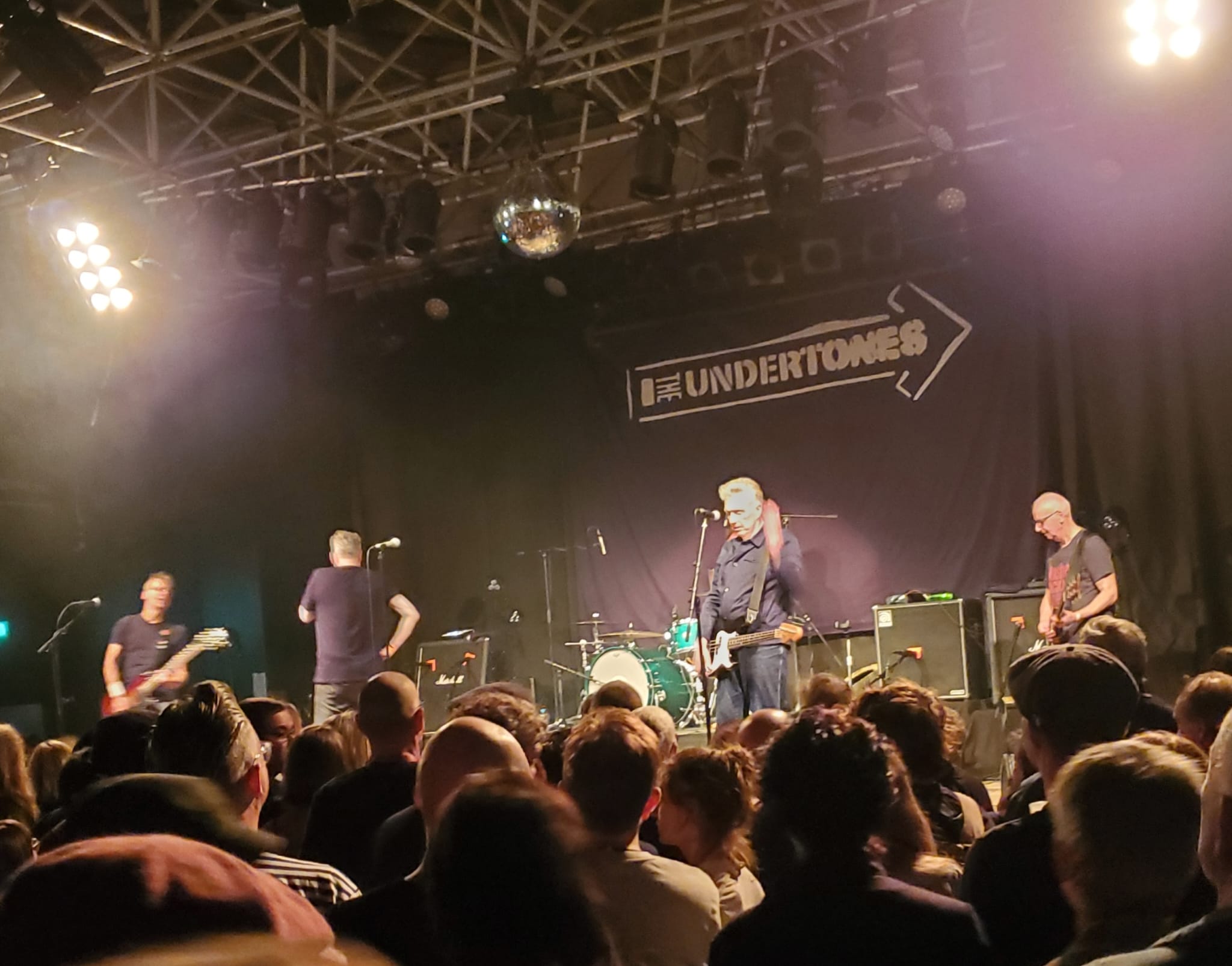
Richard Rogers:  Hi John, it’s great to see you. We are here in Düsseldorf for your band, The Undertones who are playing tonight at a sold out Zakk club. Welcome.

First question, why are you doing the tour when there is nothing to promote?

John O’Neill: hi Richard. To make money, basically that is the simple answer. Since 1999, our fees have trebled. With Feargal Sharkeyl not being in the band, we don’t get played on the radio now. Maybe Radio Six but otherwise we don’t get played, it’s very frustrating. At this stage, everybody has retired from their main jobs, so we do it just for a bit of money and we really enjoy it. We are getting bigger and bigger audiences and we are selling out most of the shows.

RR: so you’re just doing it for the craic (fun) really?

JON: yeah that’s it. And merchandise is selling better than ever before. So really, it’s just a hobby. But you know, The Undertones even in the olden days, we regarded it as a hobby, not a career thing. We never took ourselves that seriously. Even now with the last two albums they are under copyright control with us. We do not even have a publishing deal. It never seemed worth our while so we just kept the copyrights. 

Andy Ferguson, our manager always made sure that we had our rights, particularly after we had paid off our advances to record companies such as EMI and Sire Records. The last deal Andy did for us was with Universal and that was a good deal. We even have our own publishing company now called West Bank.

RR: so what happened with all the publishing when you were with the band That Petrol Emotion?

JON: well, Andy was managing the Petrols as well. We did not have a publishing deal for the first four albums by which time I had left the group. They got Scott Litt to produce the fifth album the guy that did the R.E.M. albums and they immediately got a big publishing deal. The albums I did with them were put into the deal, so in fact I got no money at all from them. I get the odd royalties for those albums now and again.

RR: I bought the first two albums Manic Pop Thrill and Babble but never went out and bought the third one which I’d heard and thought sounded odd, quite strange?

JON: no, it wasn’t that great. But the fourth album Chemicrazy, the one after I left was a great album. I personally think it was their best album, even though I wasn’t involved. It’s a good record again produced by Scott Litt.

RR: I heard a rumour and I don’t know if it’s true, that Paul Whitehouse, the comedian, actually auditioned for That Petrol Emotion in some capacity.

JON: yeah, that is true. He wanted to be the singer. We had no singer before Steve Mack and we put an advert in the NME. We didn’t say anything about The Undertones and this guy turned up and he couldn’t sing a note and it was Paul Whitehouse. But he was very funny, even then.

RR: actually, my mother said that he’s doing a fishing program with some other comedian, but I live here in Germany so I don’t see it. They’ve both been quite ill, I believe.

JON: yeah, that’s right. He is doing the program with Bob Mortimer from Reeves and Mortimer. Fishing must be an end thing that they do to relax.

RR: why did you leave That Petrol Emotion?

JON: my wife got pregnant with our second child, she was homesick to get back to Derry, basically. There was a tour that was going to be set up in America for about three months and I said ‘no, I can’t do that’ so I said I would leave the band. 

RR: and of course you were in the band Rare as well. I thought Rare were incredibly innovative and ahead of their time.

JON: well, I don’t know about that! I enjoyed that and we wrote some good songs. Funny enough, we’ve reformed and we’ve made another record. Which maybe we will try and put out as well.

RR: are you looking for record labels at the moment?

JON: well, no, we are just going to try and do it ourselves, there’s no point, no point. Maybe we’ll press about 1000 copies on vinyl, just to get it out there.

RR: how did you get on with Seymour Stein head of Sire Records who initially signed you up in the 1970s?

JON: yeah, we got on great actually. But the deal we signed was dreadful and it seemed Sire Records was getting 90% of everything we did and Andy Ferguson was seeing what was happening as he was working at Sire. He could see that we knew nothing about publishing and PRS and he said ‘I can see that you need help and I’ll manage you for one year and I won’t take any money for it and get you out of that deal and I’ll teach you all about publishing and everything’. You know we were so lucky getting someone as amazing as Andy from the very start. He’s been with us the whole time up to this year because he’s not been very well. The last thing he did for us was sign a new publishing deal.

RR: people will be very happy that you’ve done new music with Rare can you tell us a bit more about that please?

JON: well, we did it all ourselves. Luckily, a guy we were working with had a studio in his sitting room so we did it there and he helped us do the mixing there too. I played nearly everything, but we got in a drummer. 

RR: so the six or seven albums you’ve done with The Undertones plus the three That Petrol Emotion albums and the Rare album of those which is your favourite and why?

JON: well, I think the first Rare album actually. I got so involved with it because it was at the time when electronics were really coming in, so I was learning things like software, Cubase and Logic and how to use a sampler. I liked the thrill of it all out there, and I like that whole thing with bands like Massive Attack and Portishead, and I just fell in love with it, the whole Trip Hop thing. And that’s where I was headed. I was just starting to just write songs, getting them through a loop and then cutting them up and getting a tune that way..

RR: it seems like a completely different way for you to write songs.

JON: well, I was trying to get out of the same old chord stuff. Just making up a tune without the chords and then putting the chords in later, but really having that really cool beat there. Although it was very hard to re-create that live. We worked with triggering and samples live, but we had a live drummer as well. Especially back then in about 1995 with the technology as it was. You’d be in the middle of a set and the computer just crashes. It’s just unbelievable how the technology has come along.

Part 2 of the interview with John O’Neill will be available on Music2deal shortly.

Links:
https://music2deal.com/gb/richardrogers

German · Tips

How To Prepare To Work With A Music Producer

Brad Chapmen
by Brad Chapman

Brad Chapman has been doing vocal pre-producing for over 35 years, and developed a signature technique for producing FEEL while working with producers and artists such as: Quincy Jones, David Khane and 100+ Grammy winners.


1. Personalized Warm Up Exercises:
Learn how to warm up your voice with exercises specifically for you. Canned warm ups or YouTube warm ups, most likely won’t work well for you (they might even hurt you.) Your warms up should be specifically for you.
Singing songs is an ineffective way to warm up, as you could be tiring out your voice; rather than warming it up. Why do I stress this topic? Being warmed up to your best vocal condition, will keep you from being distracted by your voice and keep your mind on the story line and emotions.
My phrase for this is ‘sing from feel’. Feel the emotion first and then sing them out. If you do cardio and or a steam room, do these before you do your warm ups. Especially if you have an early morning performance.

 
2. Constantly Train And Be Prepared:
Start pre-production now and never stop. You must always be preparing for the right moment. A quote from Grammy winning Jeff Bhasker is: “If you’re not completely ready for me, I won’t produce you”. This is something I hear more and more from seasoned producers. They don’t want to train and develop you. It’s up to the vocal artist to be trained and prepared.
Developing a strong belted-head-voice will keep the producer from having to fight to record your voice due to overloading the pre-amp. (Don’t yell on your high notes.) If producers have to limit the sound, this results in less color in your voice. Also, intimate passages are difficult to record unless you can control the volume dynamics thru belted-head-voice.

 
3. Work With Someone During Vocal Tracking:
Train your voice and ears for the microphone, headphones, floor monitors, and in ear monitors. There is always someone running your sound system or vocal tracking (at least there should be.) I realize that there are a few stories of artists like Prince and Todd Rundgren self-producing. (However, I doubt that they were alone during the vocal tracking.) The reason you want to work with someone during your vocal tracking is that it is quite complicated to engineer and focus on your emotions of the song.
The totally self-produced vocals I’ve heard, lack feel and that’s what the vocal needs the most. Remember always that singing is communication to your fans. Having a producer in the studio helps make sure you are communicating, otherwise you’re
singing to yourself. If you’re producer doesn’t know that, ask him to listen as an audience would and give you feed back. Your vocal expression if far more important than the Sonic’s of the recording.

 
4. Befriend Your Producers:
Become immediate friends with your producers. Get them to like you, so that they care about your performance. (The average producer is like the average audience. If you don’t take care of your electronics, then they assume that you are not a quality singer. If you ’piss them off’, they may actually intentionally create a bad mix, where you can’t hear yourself.). Note: Please refer to Music Connection Magazine, cover page ‘Don’t Piss-Off The Sound Guy: http://www.musicconnection.com/dont-piss-off-the-sound-guy/
Your producer actually can purposely or accidently ruin your voice and your career.
When people hear you sing and you don’t understand the electronics you’re performing through, your audience will blame you for sounding out of tune and strained; and they should blame you. When you can’t hear yourself comfortably with headphones, in ear monitors or stage monitors; you will sound tone deaf and/ or over the top (meaning that you are trying too hard to hear yourself).

 
5. Monitor Feedback Is One Of Your Enemy’s
Buy a small mixer, microphone, head phones and floor monitors and use them every day (even while doing vocal exercises.) Learn about how the equipment works. Then, you can talk intelligently to your producer and make sure the recording studio and the live audience will hear you at your best; and consider you a good to great singer. When you put headphones on at the studio, you must communicate with the engineer/producer in order to make yourself sound great to yourself in the tracking mix.
Have your voice working so well that when the producer, stage or studio, doesn’t need to correct you; or if he does, you can make corrections on the spot. Always test your mic before the music starts. If you start singing with the music and your mic is off, it’s quite embarrassing and again the audience will blame you; not the sound man.

 
6. Feel Your Song’s Story; Ignore Mistakes During The Performance:
Ninety percent (90%) of your singing must have feel. Make sure that your vocal problems do not distract your conscious mind from the feel of the song. Your mind should be at least 90% on the story and how you feel about it.
The producers call this ‘feel’. They will always ask you for more and more feel, and emotional expression. They know that is the only way they can produce a performance
that means something to your fans. If you make a mistake, learn to ignore these and continue singing the song’s story with emotion; and stay in the feel of the music and the story.

 
7. Train Until The Song’s Technique And Emotions Are 2nd Nature:
How is this done? Repeat your song over and over again. You will develop the ability to stay in the story from beginning to end; never being distracted. At the same time, make the story’s emotions the only place you want to live in, as you feel the story.

 
8. Enjoy Your Performance And The Music:
Now, you will have a great time performing live and in the studio, and everyone attending will enjoy your great performance.

 
Brad Chapman Vocal Pre-Producer http://www.bradchapmanvocals.com

English · Interviews

Interview with Danny Talevski, Director of Paiday.Inc – A Live events, Artist Management and Publishing Powerhouse (USA, ASIA, EUROPE)

FullSizeRender

Danny, you are the exclusive representative of Music2Deal in Australia, anything you would like to share about this?

Well firstly, I’d like to take a moment to say a big “thank you” to both Mario Christiani and Sudhir Shreedharan for the opportunity to be an element of Music2Deal’s fast-growing international music platform for connecting music professionals together in one hub to provide musicians, record labels and a&r’s supplementary opportunities and a complex way of connecting. It’s a perfect correlation to intertwine both entities Paiday.Inc and M2D to create a new revolution in the music Industry internationally

Tell us a little bit about your experience in the Music Industry.

I got started into the music industry as a producer and DJ at a very young age, in my mid-teens. I eventually developed and grew my experiences to owning my own nightclub operating in Melbourne’s premier precinct at the age of 21 that was tailored around the Gay Industry, a nightspot that catered to fashion designers, dancers, entertainment aspiring individuals and professionals that were well recognized in the Industry. The nightspot had a very good run and was later sold as I moved to the US for a few years where I had built the foundation of Paiday.Inc. The USA allowed me to network with Artist and Music Managers, A&R’s, Artists and many Music Industry tycoons and moguls whom are now a part and of our Executive Management Team.

Very Impressive, please tell us a bit about Paiday.Inc Management

Paiday.Inc Management is Asia Pacific’s Live Events, Publishing, PR & Artist Management Powerhouse. Paiday.Inc carries the need to develop independent Artists to showcase their material on an international level via our colossal distribution channel as well as our marketing and advertising networks.

Paiday.Inc connects music fans with music makers all around the world. Paiday.Inc has developed a system to use music as a vehicle to reach people around the globe to encourage and promote peace, love & unification with musicians with different cultures and talent which is the vital and the true core of our business.

By involving partners and producing events on a global level will allow us to fulfill our goal. Our company offers its clients every conceivable service available in the business. We are a worldwide organization, designed to provide on the -ground support in countries far and wide. Our company is storming toward the genesis of a new music model, one that places the artist at both the creative and financial center.
Have there been any major “stumbling blocks” for you while growing in the competitive world of Entertainment?

I mean, from an audio production, management and live venue operation perspective many opportunities in the past were constraint by missed opportunities and stumbling blocks as you may call them, but nevertheless the growth and positives outweighed the negatives in my experiences within the Entertainment Industry for the reason that I always had a solution and a way to overcome my obstacles. My biggest stumbling block to date was a partnership cave in with poor and incapable promoters in South Korea, which had breached on an agreement for one of the largest festival projects I had planned and invested to be the biggest in South Korea, we overcame the situation and have made great turns and major growth since that day. There has always been stumbling blocks during the climb but nevertheless these are the situations that assist in the current situation strategy which allows a CEO to reflect on what could possibly be the pros and cons and which option outweighs the other by reflecting on the past experiences. Competition is greatly valued and respected from my point of view. As a competitor I believe in putting up a good competition against competitors by implementing innovative and new ideas and becoming the best, but at the end of day we must always grow to be supportive of one another, and learn to appreciate everyone’s goals in the Industry. I have a vivid eye for the term competition as I see it more of an opportunity.

What do you think is the single largest problem faced by the music industry today? How do you think it can be resolved?

I don’t believe there is one single largest problem faced by the music industry, there is 99 problems the industry is up against, however in saying that I believe one of the single largest problem faced by not only the Music Industry but the Musicians itself is that it is harder than the analog era for Artists to get recognized and thanks to the birth of Music2Deal shall definitely light new flames and gleam with promising results. It’s a great networking platform to help engage Artists with Management Companies like Paiday.Inc to assist with Independent Artists careers with flair and conversant business consulting.

Big plans ahead for 2015?

Many big plans, majority of the year of 2014 was in fact the foundation-strengthening stages of Paiday.Inc to execute our big new innovative plans in 2015, with a brand new roster of Artists, Events and a brand-new service that shall be something that our company will be tailored around is very exciting and looking forward to the new year ahead.

Do you think Music2Deal.com can help get Australian artists to a further audience both nationally and internationally?

Music2Deal.com is a great example of an innovative platform to assist in connecting Artists with labels, managers, a&r’s and music executives in general. I confidently believe in Music2Deal and its unique platform to be a major bond-hub for music professionals not only in multiple countries around the world, but more so in Australia, and giving Australian artists an opportunity to connect with International labels and management companies to assist in their aspiring Music careers on an international and global scale.

by Sara Shirazi