English · This & That

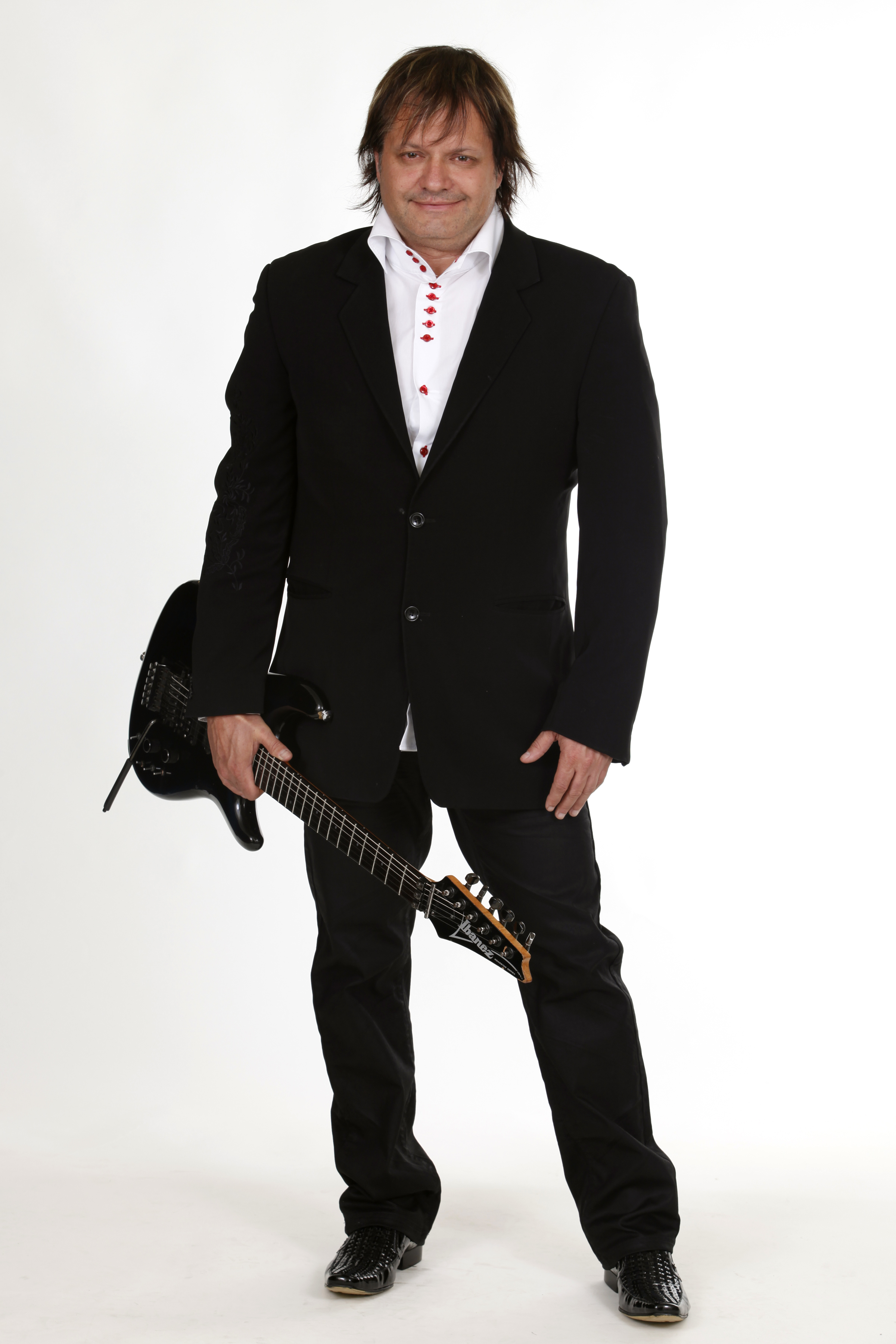
Interview with Mauritz Lotz by Antionette Cronje (Part 2)

Q:  How do you think the music industry has evolved over the past 3 decades, in terms of making a breakthrough in the industry?

A:  In my opinion, 20+ years ago, the recording scene, music industry and artistic expression seemed a lot less “democratic” and more “exclusive” in some way. The industry and society as whole in my opinion has changed dramatically since then. We are driven more by social media, internet and technology than ever before. Today you can for example become a YouTube superstar long before you get out there and somehow really connect with your audience. We are living in the “download generation” and record companies, producers and artists now have to keep finding new, different and effective ways to impact on the market. Even though we do have so many more ways and means to express ourselves with the help of social and internet media etc, making an impact is probably even more challenging due the market being almost “saturated” and/or “bombarded” with so much product through broadcast and especially internet media… having said all of this, there is a lot of creativity going on the planet, a lot of greatly talented people everywhere if one stops for a second to realize how much there actually is out there, whether it be a new artist/s or song that pops out of “seemingly nowhere” or a new song album from a well known artist…either way, what really resonates at the end of the day will remain…a great song, a moving piece of music or a painting or piece of literature… whatever the artistic expression, let it be bold and truthful..

Q:  Why do you think some artists are what we call a “one hit wonder”?  What do think could be the reasons, why they could never release a chart topper again?

A:  I think today, quite a few “ideas” are often driven by technology/production and arrangement as opposed to the thing that really resonates with all of us…a strong melody/lyric etc…I think a lot also has to do with what I also mentioned in my previous response (see above)…I, like everyone else nowadays I guess, do also rely on technology to facilitate and enhance the creative process but try to focus on the tune + feeling/message I am trying to get across primarily..

Q:  As a composer, from what do you mainly draw inspiration from and do you follow a kind of “recipe” when you compose?  Do you have any tips for young songwriters which they can apply?

A:  This will sound probably very cheesy now but, I guess, that what inspires me is life itself, creative people + what I refer to as the “creative universe”…that what does not seem tangible, measurable or controllable…If it is something I am writing for picture, “the story is always king” as they say sometimes, making sure I am getting the director’s perspective and intention across…In terms of the process itself, I don’t think I have some kind of formula/recipe of sort…however, as mentioned, I just try and get the “feeling/sentiment” across and then draw from my influences/bit of knowledge and mostly experience to do that….

Q:  Please tell us about your latest project Orbium?

A:  Orbium is a project I am extremely excited about and have been busy with on and off since 2009….I’m currently busy putting together the conductors score of it with the help of maestro Graham Scott…It feels a bit like my “best kept secret” for now….hehe…watch this space for more detail…..;)

Q:  What do you think about Music2Deal and how can it benefit South African artists?

A:  I think Music2Deal is certainly a great way to and meet and network with other industry people on a global level. It is and should be always about expansion and sharing of music and experience. I therefore trust that Music2Deal is already doing exactly that, thank you.

Thank you in advance in participating in our quest to broaden the SA Music2Deal network.

My pleasure and privilege!

Play it LOUD!!


Here’s a link to Mauritz’ website: http://www.mauritzlotz.com/

English · Interviews

Interview with Mauritz Lotz by Antionette Cronje (Part 1)

Q:  Your career as a guitarist, composer, and producer spans nearly 3 decades.  Where did it all start?

A:  I guess it all happened in a kind of “unassuming way”… At the age of 10, my father brought home an acoustic guitar the one afternoon. I was curious about the instrument and he then showed me how to play some basic chords…My intrigue/curiosity and obsession with the instrument led me to pursue a career in music. For me personally, back then and even now still, music as a whole remains to be a world of wonder which I will continue to explore and learn from…

Q:  If you were to take a walk down memory lane, what is the one moment in your career, which stands out from the rest?

A:  Wow, it is really challenging for me to single out just one because ’till date there were so many memorable moments in studio + on/off – stage I was fortunate to experience…when I first went to LA in the early 90’s, I met one of my absolute music heroes Trevor Rabin. We spent a whole afternoon in his studio just chatting about music and guitars etc. It was an awesome and inspiring experience for me. I guess part of the reason it somehow stands out is that it was my very 1st trip overseas + it happened shortly after the release of my 1st solo album so; a lot of 1st impressions/new experiences for me back then.

Q:  In South Africa, you’re mostly known as a stellar session musician, but in fact you are also the man behind various film and stage productions as a composer and musical director.  Please tell us more about your work as composer and musical director and the productions you were involved in.

A:  Thanks for the compliment. For most of my musical journey so to speak, I have always felt that I wanted to learn/explore music as a whole. I therefore feel, not just inspired, but also somehow compelled to contribute in different ways musically. As much I enjoy playing the guitar, I see it as only a part of the “bigger picture”, thus indulging in music production, composition, arrangements etc. etc… Writing music to picture is something I have had a passion for a long time. The most recent film I have scored for is a movie entitled “Ordinary people” and I thoroughly enjoyed working on the music. “Handel’s Messiah – An African Renaissance” was a stage musical which I was fortunate to be involved in. quite a few years ago I had to do a “re-work” of it and analyzing that particular score taught and inspired me so much!

Q:  You’ve had the opportunity to support international acts, such as The Rolling Stones, Sting, Roberta Flack, “Mr. slow hands” Eric Clapton and Chris de Burgh, to name only a few.  What was it like to work with these big name artists?

A:  The sizes of the audiences + the energy/vibe at these types of events are quite a rush. It was also sometimes refreshing for me having had the opportunity to meet some of the musos in the band and chat about how they see and experience their musical journey. It certainly puts perspective on a few things as I think we perhaps sometimes tend to easily get caught up in our “immediate” environment on a “functional/survival” level. There are so many things to explore beyond our own borders/parameters and obviously internet and technology has also made this a lot easier and convenient.

Q:  According to my research, you’ve worked on more than 1000 local albums as a session guitarist, composer and / or producer.  That leaves me with the question, have you ever experienced “writers block” and if so, what advice can you give young song writers and composers to overcome this?

A:  Jip, it happens sometimes. Whenever I experience a “lull” in the creative flow, I then try to remind myself that I need to trust that creativity is not something one can always measure or even control for that matter. Without perhaps losing the focus or determination to complete a task or idea, I do however then walk away for a few minutes, sometimes hours or days if I need to and can afford it…and then come back to it with a “fresh mind/perspective”. Sometimes it also just helps me to listen to a piece of music or something completely different in order to force my mind out of what seems like a “rut”… Inspiration and creative flow sometimes can come from different places/experiences and often when one least expects it…I don’t think there is a right or wrong way…whatever works I think..

Q:  As an award winning artist and several award nominations behind your name, what qualities must young songwriters cultivate to reach this level of musicianship? 

A:  Having said that I believe that one can’t really control or measurecreativity, I do however feel that regular practice (even if just “mental rehearsal/visualizing notes”…I seem to do a lot of this by default for some reason…) helps me to stay “aware/in tune” for what ideas may come. For me personally, time management and the discipline to regularly spend time and focus on developing one’s skill/s are imperative. Whether it be in the very late hours of the evening or in my car on a plane somewhere, I always will make and find time to listen to music. I do however tend to listen to a variety of stuff I find inspiring from a writing point andproducing of view as opposed to a lot of guitar driven music.
The second part of the interview will be published on Monday.

Here’s a link to Mauritz’ website:  http://www.mauritzlotz.com/

English · Interviews

Interview with Marc Friedman – Entertainment Lawyer South Africa

Antionette Cronje, Music2Deal representative (South Africa), asked Marc Friedman some questions regarding issues, such as copyright, publishing, licencing, needletime and how these issues are addressed in South Africa.

 If you want more detail on any of the questions below, you can contact Marc on Music2Deal at the following link: http://bit.ly/RWkh3e

 What advice can you give songwriters when they’re approach with a publishing deal for a song? What is the most critical point to look out for in a publishing contract?

 The most important aspects are the TERM OF THE DEAL and the SHARE OF REVENUE.  Sometimes publishers will present a deal that expects the composer to assign the composition for the life of copyright.  This is not the industry standard anymore; anyone can usually negotiate that the terms if for 3 to 5 years with a retention period in certain instances.  Also the revenue shares needn’t necessarily be 50/50, depending on the status of the composer and the level of effort on the part of the publisher, i.e. where the publisher is more active, they will expect a bigger share of the revenue.

What are the possible pitfalls when an artist has been approach for synch licensing deal?

Does the licensee want the piece of music in an exclusive or non-exclusive basis?  If exclusive, one should ask for a very large fee, one should never have to assign the work and should look out for words such as “BUY YOU OUT”, which suggest an assignment.  One should also ask that once can still earn public performance royalties and that the Licensee will fill out cue sheets to enable this.

Why do some publishers, who have a music catalogue or library, want to change the name of the songs, when an artist signs a publishing deal with them?

You would have to check with the publisher on this point, but it could be to try and distinguish them from similar hits with a similar or identical title.

How does changing the name of the song by the publisher of a music library impact the songwriter?

There shouldn’t be an effect of this, provided any collection society is appraised of this change to avoid confusion.

To qualify for live performance royalties, a band has to complete a live performance royalty form and submit it to SAMRO. If 3 of the band members are new to the band and are not registered as songwriters of the songs performed live, are they entitled to live performance royalties?

SAMRO (the South African Music Right Organisation) would have to clarify this, but I suspect they are entitled to collect these royalties, but the fact that they are not registered is an administrative issue for SAMRO and that these royalties may be able to be held by SAMRO until they are registered.

If an artist wants to record a cover of a chart topping hit, does he/she need to get permission from the original artist?

No.  The South African Copyright Act makes provision for a compulsory mechanical license in respect of any song previously recorded in South Africa.  This is provided that it is an identical cover.  If one changes any word, music or structure, one needs permission.

In short, what is needle time and when does an artist qualify for needle time?

Needletime is the public performance royalty, which is paid when a recording is played in public, i.e. on the radio, at a venue etc.  Needletime has always been in our Copyright Act, but has not been practiced for a number of years.  About a decade ago, it was agreed that this would be re-introduced in South Africa, but the broadcasters and music industry are still haggling over what rates should be paid by the broadcasters for the use, so it is not being paid yet.  The general sentiment is that the needletime on any recording should be shared equally between the copyright owner (who paid for it) and performers who participated in the recording.

Who owns the mechanical rights to a song?

Copyright in South Africa vests in the party who wrote it.  The mechanical right (i.e. the right to allow the song to be recorded or reproduced is just one of the rights that copyright reserves for the owner).  Copyright sits with the composer, unless it is assigned to another party in writing.

If band XYZ wants to record a song for their album and the song was offered to XYZ for re-recording by the original songwriter (who is not a member of the band), does the band have to pay any set fee for re-recording the song?

The agreed mechanical royalty rate is 6.76 % of the PPD price of a CD, although models are developing for the digital industry, where rates are often calculated on the retain price (rather than PPD, which is the wholesale price)

When entering an agreement with a management company, what percentage of the band’s income can the band expect to part with?

This would depend on the nature of the relationship (what the manager does), the status of the manager and the band, but I would say it could be in a range from 15 – 25 % with a further debate as to whether this is calculated on gross (the amount payable to the band) or net (once expenses have been deducted).

Interviewed by Antionette Cronje