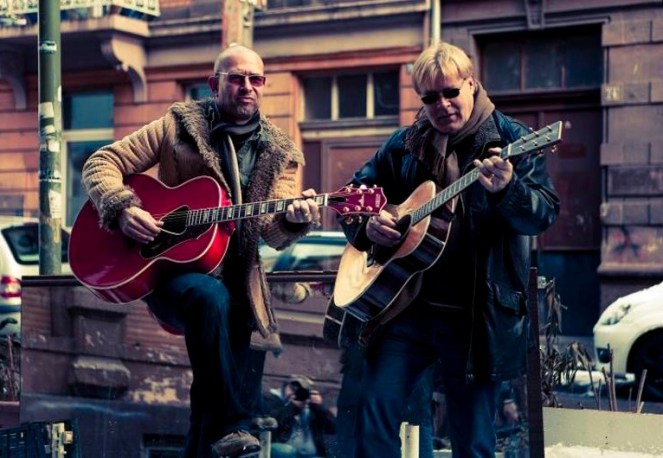
Music2Deal: Seit wann gibt es “MAX MEETS LENNY”?
Max: Wir sind uns im Frühjahr 2009 tatsächlich auf dem Parkplatz eines Mannheimer Musikgeschäfts über den Weg gelaufen und kannten uns von einer Band, in der wir beide gespielt hatten, aber nie gemeinsam zur gleichen Zeit. Zu der Zeit war ich meistens alleine Live auf der Bühne unterwegs und auf der Suche nach einem neuen musikalischen Partner und bei Lenny war es quasi das Gleiche.
Lenny: Ich glaube 3 Tage später haben wir das erste Mal zusammen gejammt und es hat sofort funktioniert. Es war von Anfang an diese Verbindung zwischen uns da, die man glaube ich auch hört. Zunächst hatten wir unglaublich viele Auftritte zu zweit gespielt und ausprobiert wie das Publikum auf unsere Songs reagiert. Parallel dazu haben wir angefangen unser Material für unser Akustik Debut Album “SUCH GOOD THINGS” in Max’ Studio aufzunehmen, welches dann im April 2010 über das Label Intrapop veröffentlicht wurde.
Music2Deal: Wie kam es dann zu eurer elektrifizierten Band EP?
Max: Wir hatten wie gesagt sehr viel zu zweit gespielt und waren neugierig ob das auch mit Drums, Bass und E-Gitarren funktionieren würde. Nachdem wir den ersten Song im Bandformat produziert hatten, war klar, das wird ein Album. Zunächst hatten wir eine Band EP mit fünf Titel im Sommer 2011 veröffentlicht um es uns betreffend des Bookings, etwas leichter zu machen. Dann ging es um die Livebesetzung und die Proben und um die anstehenden Bandgigs.
Music2Deal: Spielt Ihr lieber mit Band oder bevorzugt Ihr lieber die akustische kleinere Besetzung?
Lenny: Ich möchte weder das Eine noch das Andere missen. Wenn Du 10 Akustikgigs gespielt hast, bist Du natürlich heiß auf die Band. Das Programm unterscheidet sich auch jeweils ein wenig, da nicht alle Songs akustisch so funktionieren wie elektrisch und umgekehrt. Akustisch sind wir natürlich auch etwas flexibler und unser Programm umfasst auch einige Coverversionen, die wir vollkommen anders interpretieren wie im Original.
Music2Deal: Wie kann man sich das vorstellen?
Lenny: Wir spielen z.B. einen Pianosong wie Bruce Hornsby’s ” The Way It Is” mit zwei western Gitarren und etwas schneller oder wir haben aus Cameo’s “Word Up” eine schnelle Groove Version gemacht mit einer spanisch klingenden Sologitarre usw..
Music2Deal: Warum schreibt ihr eure Songs mit englischen Texten?
Max: Ich besitze keine einzige deutschsprachige CD oder Schallplatte und habe immer englischsprachige oder spanische Musik gehört. Vielleicht weil ich ja auch viele Jahre als Schlagzeuger mit amerikanischen und englischen Künstlern in Europa auf Tour war. Natürlich habe ich schon einige Songs mit deutschen Texten geschrieben aber ich empfinde es als wesentlich schwieriger deutsche Texte zu schreiben. Als ich angefangen habe Musik zu machen stand ich auf Police, Fischer Z usw.. Ich wollte ja irgendwie eher klingen wie meine musikalischen Helden und nicht wie ein erfolgsorientiertes ambitioniertes deutsches Popprodukt. Mein Eindruck ist mittlerweile, dass es in Deutschland als Deutscher viel einfacher ist deutschsprachige Musik zu verkaufen. Vollkommen paradox, da doch den ganzen Tag in unseren tollen formatgesteuerten Radiosendern größtenteils nur englischsprachige Acts aus England und USA gespielt werden, die uns Deutschen dann verkauft werden, weil es sowas bei uns ja nicht gibt.
Lenny: Zumindest würden wir mit deutschen Texten im Gepäck nächstes Jahr sicherlich nicht in Australien auf Tour gehen. Da haben sich die englischen Texte wirklich gelohnt. Unsere Australien Tour beginnt am 9 November 2013 in Caloundra, eine Stunde nördlich von Brisbane. Dort beginnt dann der Sommer!
Music2Deal: Wie seid Ihr den zu dieser Australientour gekommen?
Lenny: Ich hatte über Facebook Kontakte geknüpft zu Agenturen, Managements etc., ähnlich wie hier über Music2Deal. Bei diesen Kontakten war dann eine Booking Agentur aus Australien dabei, denen das sehr gefällt was wir machen und die mit Uns die Tour im November 2013 geplant und Gigs gebucht hat.
Music2Deal: Ihr habt gerade euer neues Album “EUROPEAN GIRL” fertiggestellt.
Lenny: Ja und das werden wir bei unserem neuen Label 7us Media Group am 1 Februar 2013 veröffentlichen und dieser Kontakt kam über Music2Deal zustande. Ich hatte Labels und Managements über Music2Deal angesprochen und wir bekamen recht viel Feedback. Unter anderem von Matthias Niemyt von 7usMedia Group. Nach einigen Meetings war klar, dass wir zu 7us Media Group wollen und 7us Uns auch will und wir haben den Vertrag unterschrieben. Ohne Music2Deal wäre diese Verbindung wahrscheinlich nicht zustande gekommen!
Max: “EUROPEAN GIRL” wird übrigens die erste Single des gleichnamigen Albums sein und am 18 Januar 2013 veröffentlicht und handelt natürlich von Europa.
Music2Deal: Weshalb habt Ihr das Album “EUROPEAN GIRL” genannt?
Max: Der Song handelt sowohl von meiner Familie, als auch von den vielen unterschiedlichen Sprachen und Kulturen, die es hier auf so engem Raum sozusagen um die Ecke gibt und drückt die Vielfältigkeit Europas aus und wir fühlen uns sehr europäisch. Ich möchte erwähnen, dass ich diesen Song schon geschrieben hatte, lange bevor Europa den Friedensnobelpreis bekommen hat!
Lenny: Man mischt und produziert und irgendwie ist es dann mitunter ein sehr langwieriger Prozess und je länger es dauert, umso schwieriger wird es, den Absprung zu schaffen und los zulassen. Es sind 13 Songs im Bandformat, bei drei Liedern hat Max dieses Mal die Gitarre gegen ein Klavier eingetauscht und einen Song haben wir sozusagen unplugged mit Piano, Gitarre, Cello und natürlich Gesang produziert. Und dann haben wir das Ganze in New York bei Masterdisk von Randy Merrill mastern lassen. Unvorstellbar, was das ausgemacht hat und die Kommunikation und der Datentransfer verlief, dank der heutigen Medien, total reibungslos.
Music2Deal: Das heißt Ihr musstet überhaupt nicht nach New York fliegen um euer Material dort mastern zu lassen?
Lenny: Absolut cool, Du kontaktest Masterdisk per Mail und bekommst einen Ansprechpartner, der mit Dir zusammen entsprechend deiner musikalischen Vorstellung und deines Budgets einen Mastering Engineer aussucht. Das hat bei uns wirklich hammermäßig geklappt und wir sind natürlich vom Sound überwältigt.
Music2Deal: Wer spielt den die anderen Instrumente wie Bass, Drums etc. bei euren Songs?
Max: Manuel Steinhoff spielt bei 8 Liedern Bass und Daniel Jakobi Spielt bei 4 Songs Schlagzeug. Bei 2 Songs spielt Ivo Schot Bass, er gehört auch zu unserer Livebesetzung sowie auch Lucas Müller am Schlagzeug dazu gehört, der leider bei der Produktion dieses Albums noch nicht so involviert war. Dann haben wir noch Eva Mayerhofer, die bei einem Song Background Vocals gesungen hat. Bei einer der ersten Recording Sessions hat EL TOPO alias Thomas Freier meine Vocals aufgenommen und er hat sie nicht nur aufgenommen, er hat mit mir extrem am Gesang gearbeitet. Das hat mir bezüglich des Gesangs echt die Augen geöffnet. Die restlichen Drums, Bass, Piano und alle Gitarren haben Lenny und ich selbst gespielt.
Music2Deal: Wir wünschen Euch viel Erfolg!
Max und Lenny: Wir möchten uns für dieses Interview bedanken und auch ein großes Dankeschön für diese tolle Community Music2Deal!
MAX meets LENNY auf Music2Deal: http://bit.ly/QerHi1
by Sara Shirazi
 Bei all den unterschiedlichen Berufen in der Musikindustrie kann man schon mal schnell den Überblick verlieren. Der Bundesverband Musikindustrie erklärt in seiner Kurzfilm-Serie “Berufsbilder im Musikbusiness” typische Berufe der Musikbranche. In kurzen und informativen Videos werden Interviews mit Profis aus dem Metier geführt, die ihren Beruf erklären und grundlegende Fragen beantworten.