This & That

John O’Neill – Undertones Interview – Part 2

This is the second of a two part interview with legendary guitarist and songwriter John O’Neill from The Undertones, That Petrol Emotion and trip hop darlings Rare.

The man famous for writing ground breaking hit songs Jimmy Jimmy, Wednesday Week, Julie Ocean, Here Comes The Summer, Big Decision and of course John Peel’s favourite all time song and punk/new wave anthem Teenage Kicks.  

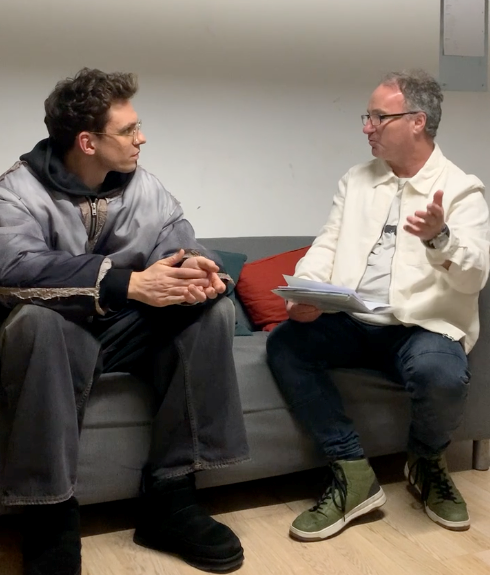
Our expert music industry A&R man Richard Rogers asks the questions.


Richard Rogers: so they put a mural up on a huge wall in Derry of The Undertones recently, what did you think of that?

John O’Neill: that’s fantastic. I was against it at the time.

RR: why?

JON: we thought it would be too noticeable and stuff. But it turned out great. Really great.

RR: as we are in Düsseldorf, it was interesting to find out that Die Toten Hosen, the German group, were massive fans of yours. Are you still in touch with the guys?

JON: yeah they’re coming down tonight to the gig. They are lovely people. Genuinely nice people. We played with them three or four times. Die Artze are the other German band that are big fans of The Undertones too. We play a lot in Berlin and in Germany because our tour manager Barry is married to a girl from Berlin so we are always doing tours here. We played the Market Hall in Hamburg last night and it was brilliant.

RR: you mentioned before we started the interview but there was a possibility of the undertones going back into the studio to record a new album, can you tell us more please?

JON: well we keep saying we’re gonna go in the studio. The thing is, Damian is so prolific he’s already put out a couple of solo records. In fact Damian started up a new band with a couple of guys from That Petrol Emotion called The Everlasting Yeah who released a record four years ago but they just put out a new album which is absolutely fantastic, it’s as good as anything that the Petrols did. Damian can write stuff all the time and I’ve got tons of stuff but I am never that happy that it’s all that great. It seems the older you get it’s harder to write songs.

RR: do you find a lack of inspiration?

JON: well the thing is my daughter came back from London to Derry and she and her husband have the two kids now and they both work, so the grandparents such as me, end up looking after the grandchildren a lot of the time. So I never get time to get into the studio it’s fantastic having the grandkids you know, I don’t know if you’ve got any.

RR: not yet my son is only eight years old. (laughs).

JON: but it’s fantastic having grandkids I love having grandkids. But very exhausting. You’re up 3 times a night sometimes.

RR: so if you wanna blame there being no Undertones records blame the grandkids! Talking about David Bowie which we were earlier, I once licensed a Blondie track onto a Bowie album which had Robert Fripp playing guitar. This was the first time that Blondie’s version of Heroes was ever released on CD format.

JON: well talking about cover versions, Die Toten Hosen did a version of Teenage Kicks and Damian came over to Germany to play the guitar on that song by the group. That was on the Learning English album. Maybe it was recorded in London and all the promotional work and parties were in Germany. Damian is my brother of course and he’s a great guitar player and I’m just a meat and potatoes guy.

RR: but of course you are a fantastic songwriter. In the UK we had this amazing DJ no longer with us called John Peel who I got to know a little bit not much but a little bit when I worked at the BBC in London. The best DJ ever male and female probably Annie Nightingale. John was out on his own and phenomenal and his favourite record of all time was written by John here called Teenage Kicks. John was really God of all DJs. He epitomised the lone DJ out there on his own looking for new songs and new artists.

JON: without John Peel, we wouldn’t have done anything. We recorded the first EP and we were about to break up because there was a lot of tension about, we wanted to make a record so that we could prove that a band from Derry could make a record. And that will do us. But then with John Peel playing it, and finally Seymour Stein (at Sire Records) said I’ve got to sign these guys. So that led to us getting a record deal.

RR: so how did you get on with A&R guys? I mean at one of the companies I worked for I had on my roster as an A&R man, 55 separate songwriters. Okay some of those were with the same band but all in all there are only so many hours in the day and so many days in the year so it’s a hard job that people don’t always appreciate.

JON: well Andy, our manager, kept us away from them most of the time. I remember Positive Touch the third LP for the undertones hadn’t sold that much so the fourth album was Sin of Pride. With each album we made, we tried to make them different which probably wasn’t a very good commercial idea. The A&R guy would come in and get us to write in a commercial way and of course we ignored him.

RR: yes you should ignore them, unless they really have something to say. (laughs).

JON: really, I had no dealings with A&R except a little during the Undertones days.

RR: that’s incredible. I did an interview with Midge Ure last year and he said exactly the same thing. The record company just let Ultravox get on and do their own A&R.

JON: Andy was dealing with all the A&R people for the Undertones and the Petrols. For Rare we had a licensing deal with Pinnacle so there was no A&R there either. The guy at Pinnacle liked it so it was released and we sold about five copies and we did a tour and I can promise you we didn’t sell very many copies because we didn’t have very many people in the gigs which was so dispiriting. Andy managed both groups but to be honest, we didn’t take ourselves too seriously even though he was always trying to make us do more promotional stuff. I think this led to Fergal Sharkey leaving the band. He could see that he could probably do better as a solo artist. As far as people were concerned he was The Undertones.

RR: yet he only had one minor songwriting credit on one song on the entire creative writing output over six albums of The Undertones. Are you still in touch with him at all?

JON: no oh no. We had some horror stories that he was involved in, but we weren’t that surprised. The fact that he was an A&R man just makes us laugh. He had no interest whatsoever in any music, he never did. You can put that in the interview, I don’t care.

RR: moving swiftly on, let’s go back to John Peel.

JON: the year before he died I think, we made a documentary. He came over to Derry. That was the first time we had met him in years and we spent three or four days with him which was fantastic, you know. He also paid for the very first recording session we ever did.

RR: so what do your live gigs entail? Is it all the old stuff or a combination of this? The early stuff you did with Fergal plus the material you’ve done post Fergal?

JON: mostly the original stuff, you know we do all the singles. Then we mix it with various songs from the last two albums, we think there’s some great stuff on those albums. You know, the people want to hear the commercial stuff.

RR: well I really hope the grandkids will allow you to do some songwriting every now and again.

JON: well you know it was my own fault.

RR: Thanks for the honest, open interview John.

JON: Thank you and enjoy tonights show.

Links:
https://music2deal.com/gb/richardrogers

This & That

John O’Neill – Undertones Interview

This is the first of a two part interview with legendary guitarist and songwriter John O’Neill from The Undertones, That Petrol Emotion and trip hop darlings Rare. 

The man famous for writing ground breaking hit songs Jimmy Jimmy, Wednesday Week, Julie Ocean, Here Comes The Summer, Big Decision and of course John Peel’s favourite all time song and punk/new wave anthem Teenage Kicks.  

Our expert music industry A&R man Richard Rogers asks the questions.

Richard Rogers:  Hi John, it’s great to see you. We are here in Düsseldorf for your band, The Undertones who are playing tonight at a sold out Zakk club. Welcome.

First question, why are you doing the tour when there is nothing to promote?

John O’Neill: hi Richard. To make money, basically that is the simple answer. Since 1999, our fees have trebled. With Feargal Sharkeyl not being in the band, we don’t get played on the radio now. Maybe Radio Six but otherwise we don’t get played, it’s very frustrating. At this stage, everybody has retired from their main jobs, so we do it just for a bit of money and we really enjoy it. We are getting bigger and bigger audiences and we are selling out most of the shows.

RR: so you’re just doing it for the craic (fun) really?

JON: yeah that’s it. And merchandise is selling better than ever before. So really, it’s just a hobby. But you know, The Undertones even in the olden days, we regarded it as a hobby, not a career thing. We never took ourselves that seriously. Even now with the last two albums they are under copyright control with us. We do not even have a publishing deal. It never seemed worth our while so we just kept the copyrights. 

Andy Ferguson, our manager always made sure that we had our rights, particularly after we had paid off our advances to record companies such as EMI and Sire Records. The last deal Andy did for us was with Universal and that was a good deal. We even have our own publishing company now called West Bank.

RR: so what happened with all the publishing when you were with the band That Petrol Emotion?

JON: well, Andy was managing the Petrols as well. We did not have a publishing deal for the first four albums by which time I had left the group. They got Scott Litt to produce the fifth album the guy that did the R.E.M. albums and they immediately got a big publishing deal. The albums I did with them were put into the deal, so in fact I got no money at all from them. I get the odd royalties for those albums now and again.

RR: I bought the first two albums Manic Pop Thrill and Babble but never went out and bought the third one which I’d heard and thought sounded odd, quite strange?

JON: no, it wasn’t that great. But the fourth album Chemicrazy, the one after I left was a great album. I personally think it was their best album, even though I wasn’t involved. It’s a good record again produced by Scott Litt.

RR: I heard a rumour and I don’t know if it’s true, that Paul Whitehouse, the comedian, actually auditioned for That Petrol Emotion in some capacity.

JON: yeah, that is true. He wanted to be the singer. We had no singer before Steve Mack and we put an advert in the NME. We didn’t say anything about The Undertones and this guy turned up and he couldn’t sing a note and it was Paul Whitehouse. But he was very funny, even then.

RR: actually, my mother said that he’s doing a fishing program with some other comedian, but I live here in Germany so I don’t see it. They’ve both been quite ill, I believe.

JON: yeah, that’s right. He is doing the program with Bob Mortimer from Reeves and Mortimer. Fishing must be an end thing that they do to relax.

RR: why did you leave That Petrol Emotion?

JON: my wife got pregnant with our second child, she was homesick to get back to Derry, basically. There was a tour that was going to be set up in America for about three months and I said ‘no, I can’t do that’ so I said I would leave the band. 

RR: and of course you were in the band Rare as well. I thought Rare were incredibly innovative and ahead of their time.

JON: well, I don’t know about that! I enjoyed that and we wrote some good songs. Funny enough, we’ve reformed and we’ve made another record. Which maybe we will try and put out as well.

RR: are you looking for record labels at the moment?

JON: well, no, we are just going to try and do it ourselves, there’s no point, no point. Maybe we’ll press about 1000 copies on vinyl, just to get it out there.

RR: how did you get on with Seymour Stein head of Sire Records who initially signed you up in the 1970s?

JON: yeah, we got on great actually. But the deal we signed was dreadful and it seemed Sire Records was getting 90% of everything we did and Andy Ferguson was seeing what was happening as he was working at Sire. He could see that we knew nothing about publishing and PRS and he said ‘I can see that you need help and I’ll manage you for one year and I won’t take any money for it and get you out of that deal and I’ll teach you all about publishing and everything’. You know we were so lucky getting someone as amazing as Andy from the very start. He’s been with us the whole time up to this year because he’s not been very well. The last thing he did for us was sign a new publishing deal.

RR: people will be very happy that you’ve done new music with Rare can you tell us a bit more about that please?

JON: well, we did it all ourselves. Luckily, a guy we were working with had a studio in his sitting room so we did it there and he helped us do the mixing there too. I played nearly everything, but we got in a drummer. 

RR: so the six or seven albums you’ve done with The Undertones plus the three That Petrol Emotion albums and the Rare album of those which is your favourite and why?

JON: well, I think the first Rare album actually. I got so involved with it because it was at the time when electronics were really coming in, so I was learning things like software, Cubase and Logic and how to use a sampler. I liked the thrill of it all out there, and I like that whole thing with bands like Massive Attack and Portishead, and I just fell in love with it, the whole Trip Hop thing. And that’s where I was headed. I was just starting to just write songs, getting them through a loop and then cutting them up and getting a tune that way..

RR: it seems like a completely different way for you to write songs.

JON: well, I was trying to get out of the same old chord stuff. Just making up a tune without the chords and then putting the chords in later, but really having that really cool beat there. Although it was very hard to re-create that live. We worked with triggering and samples live, but we had a live drummer as well. Especially back then in about 1995 with the technology as it was. You’d be in the middle of a set and the computer just crashes. It’s just unbelievable how the technology has come along.

Part 2 of the interview with John O’Neill will be available on Music2deal shortly.

Links:
https://music2deal.com/gb/richardrogers
Interviews · music industry interview · Music2Deal.com

Interview with Lasse de Flon, the new representative for Music2Deal Scandinavia

Music2Deal: Lasse, you’re the exclusive representative for Music2Deal across
several Scandinavian countries. How do you feel about the
responsibility of handling multiple countries simultaneously?
Lasse: I have spent many years in various prominent positions within the music
industry across Scandinavia. Originally from Stockholm, Sweden, I resided and
worked there until 1988. Subsequently, I lived and worked in Oslo, Norway, for
11 years, and I have been based in Copenhagen, Denmark, since 1999. The late
Keith Flint once kindly called me the Scandinavian father in his distinctive Essex
accent.


Music2Deal: What brought you into the music industry? How did your journey
in this field begin?
Lasse: I began my musical career at an early age. My elder sisters & brothers pushed
my musical taste with The Beatles, The Rolling Stones, Simon & Garfunkel, Cat
Stevens…, and my mom & dad’s early Jazz from the ’40s and ’50s & ’60s. I was
brought up with a singing family playing various instruments.
Later I found my own musical taste and when disco, reggae & punk really took
off, in the ’70s, I started DJ’ing, at the age of 15, at our local youth club, and
later also played in various band constellations on my guitar that my sweetest
big brother bought and taught me about when I was 10. My journey continued
as I assisted bands on tour, maintained my DJ’ing in clubs, and worked in
record stores. In the vibrant 1990s, I launched a music distribution company
and was later recruited, along with ten others, to establish Playground Music
Scandinavia in 1999. From 1999 to 2002, I served as the Scandinavian Label
Manager for Mute Records UK, before founding my own company in
Copenhagen the same year.


Music2Deal: As both a music publisher and record label owner, could you
reveal some behind-the-scenes strategies for how you discover
new talent? What are the key things you look for?
Lasse: Initially, I focus on listening. Next, I assess the artist’s performance, considering
both their musical and visual presentation. This includes evaluating their
engagement in the social metaverse, as well as their audience and fanbase.
It’s intriguing to picture you in an office, identifying new talent.

Music2Deal:How do you operate in this role?
Lasse: I certainly look for great music daily throughout the entire musical spectre.
Often I receive great music by great artists too.

Music2Deal: So, am I right in imagining you working from an office while
managing the talent scouting?
Lasse: I use to have a proper office with a desk, posters and gold & platinum discs on
the wall, a huge record collection and a fancy listening department. The days of
traditional office settings are behind me; now, I can work from virtually
anywhere in the world using my powerhouse computer. With my headphones on, I engage in communication, marketing, promotion, distribution, licensing,
publishing, legal contracts, and all the other enjoyable tasks that come with my
role.

Music2Deal: How do you determine if something is fresh and current? What’s
your method for staying in tune with industry trends?
Lasse: I listen to my heart, really. I trust I can hear and feel what’s great and not. It has
to be genuine. All others are already too many.

Music2Deal: After your workday, do you head to the studio to continue making
music, or do you unwind in other ways?
Lasse: Sometimes I play my guitars or make music on my computer. I love making food,
drink good wine and play tennis too. I also study lots of other things in life from
the blockchain to vibrational Schumann resonance, and I have a deep
appreciation for music from diverse cultures, including jazz. As I grow older my
focus increasingly shifts towards the metaphysical aspects of existence.

Music2Deal: What advice would you offer artists on Music2Deal.com to help
them succeed in the music industry?
Lasse: I would ask them to work hard. Believe in what they do. Make them understand
that thing’s might take time but with great courage and strong beliefs they
might be able to live and work with what they love. And of course also share
the insights and resources I’ve gained from my extensive experience in music


Links

https://music2deal.com/scan/subexile

https://www.subexile.org