
Please tell us a bit about yourself.
Bought a guitar from a school friend in 1963 because he got the girls – He still got the girls and I was stuck with the ‘Rossetti Lucky 7’ – after playing it till my fingers bled I eventually got myself a gig with my first band The Howlin Blues – We were resident at Newcastle’s Club AGoGo alongside The Animals, John Mayall’s Blues Breakers, The Graham Bond Organisation and everyone else on the scene at that time.
Fast forward to the early 70’s – After gigging in just about every toilet in the British Isles I began getting offers from the likes of the early Roxy Music and Curved Air as their bass player – lots of bands and tours later I got fed up with the road, a case full of dirty underwear and endlessly losing my tooth brush!
I decided to focus more on recording studio sessions and played on all kinds of pretentious new wave rubbish of the time – I invested in a Teac four track tape recorder and some microphones of my own and also with a bit of extra cash I bought a new toothbrush!
Moved from Geordie land on Tyne and landed in South Croydon where I started writing and recording songs for anyone and everyone – some of them were mindless crap like much of the late 70’s pop music – over indulgent noise with endless tape loops of percussive drainpipe hitting and flanged clarinets – it made what Ferry was doing in Roxy Music sound quite straight and normal – Obviously I couldn’t get myself arrested with a record label producing such none commercial tosh which at that time I attempted selling as ‘Art’ – Talk about having your head up your own bum. I wasn’t alone, 99% of everyone else I knew shared the same delusion.
How did you get into production in the first place?
Fast forward to early 80’s – Whilst living in Chiswick I set up a studio and production company called Off-Beat Music in Hammersmith Studios in Yeldham Road just off the Fulham Palace Road. We were over the yard from the rock band Yes and literally just through the wall from Thomas Dolby’s studio – when Tom was away on tour I would run in there and nick his gear.
I had two business partners who managed to get an ever flowing stream of work for me writing and producing music for radio and television adverts – I did everything from ‘Guinness’ to music for baby milk and ladies underwear. Rock n Roll!
After a year or so of following the musical briefs of twenty million west end marketing guys on cocaine I longed to make pop records or just work on a rock band project – something that was real!
A short time later I received a call from an old girlfriend saying that ‘Frankie Goes to Hollywood’ were rehearsing in a hotel in Jersey where she lived and Holly Johnston was interested in working with me – Holly had heard an album I had produced for an artist called Carey Duncan on the big indie Irish label Ritz Records. Would I like to meet up with him to discuss.
Around the same time a good friend of mine had sent me a great but sad song about heroin addiction called ‘Smack’ – it had a kind of Rickie Lee Jones type vibe about it with an incredible lyric and hook and I wanted to find an artist to cut it with. I had been recording Bobby Tench (ex Jeff Beck band) and guitarist Big Jim Sullivan (ex Tom Jones) and loving being in amongst creative guys who could deliver a performance. The song definitely wasn’t right for Holly but I wanted to find a few more songs of the same nature and put together a collection with various artists fronting them.
Maybe it would be something that a major label might go for if I could round up some names but where on earth would I start the ball rolling. I wasn’t known outside of my own front room and still felt very much like a hayseed from the north.
They might all go for it especially if a percentage of the sales were for an anti drugs charity. I didn’t know one musician that didn’t know of someone that had been badly affected by drugs.
I had lost one or two colleagues to heroin over doses and saw the state of my ex girlfriend (actress Sarah Miles’s) son Tom, when he repeatedly got himself totally wasted and into a torpid mess on smack. She had spent a fortune on getting him cleaned up time after time and eventually his father, the playwright Robert Bolt sent him off to be locked up in Minnesota somewhere; it worked, Tom was lucky to have that kind of support behind him to get clean.
After months of working around the clock I had a group of two dozen top session players and many top names on-board to design the best anti drugs record of all time; EMI signed the deal and gave me full support along with my own production office, my own p.a. and pr person.
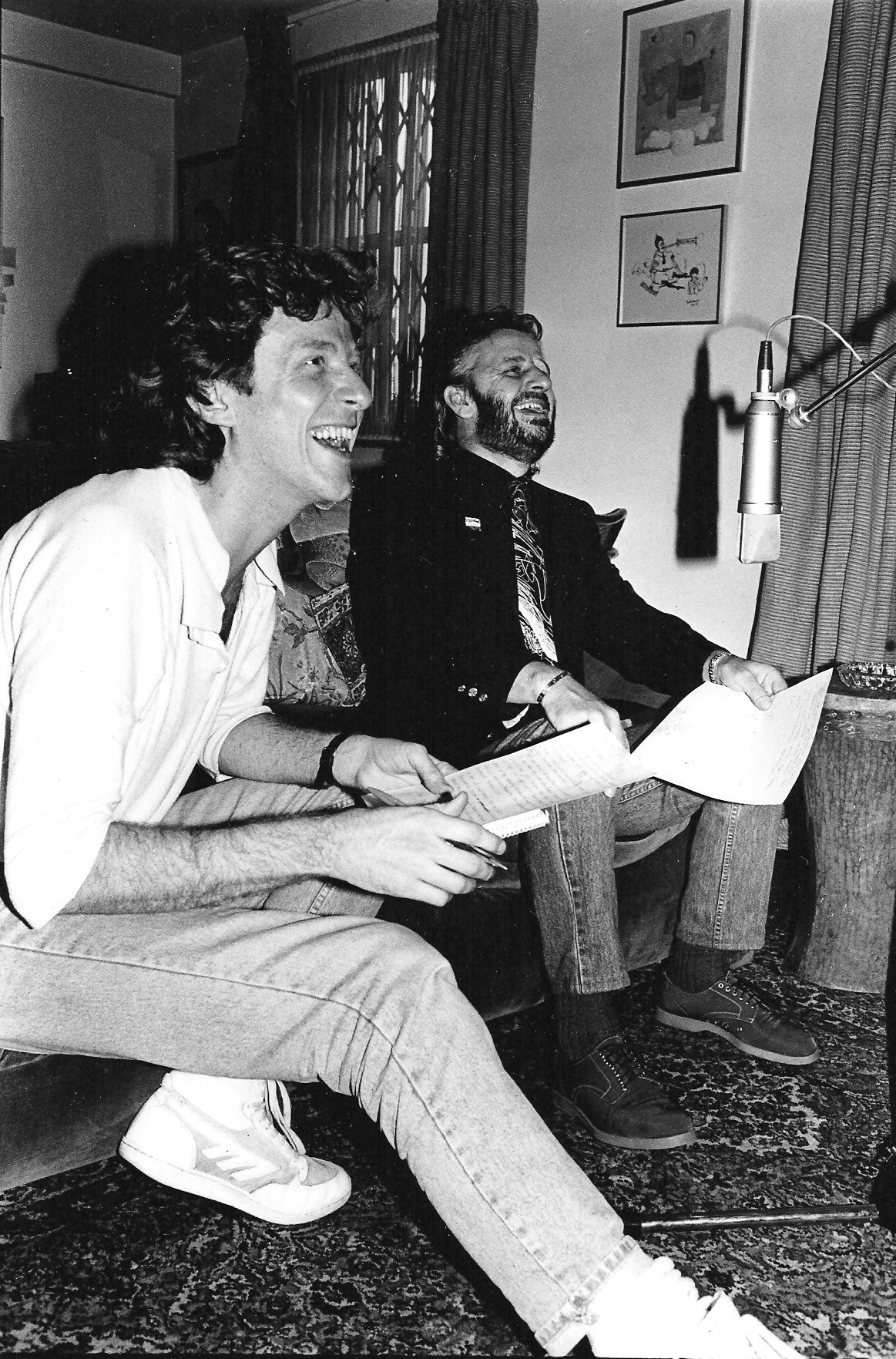
‘It’s a Live-In World’ was about to hit the planet in a big way! I had free run of all studios in Abbey Road – I was invited to work at the most famous home studio in the world ‘Tittenhurst Park’ which belonged at that time to Ringo Starr – Ringo bought it from John and Yoko when they moved to New York – Ringo asked me to work on a track at Tittenhurst with engineer Martin Adam and he would play on my album along with his son Zak Starkey.
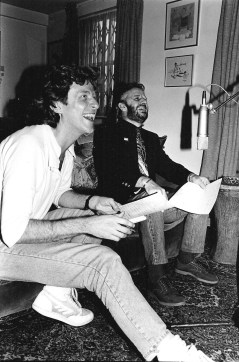
I had co-produced tracks with Paul and Linda McCartney, wrote songs for Kim Wilde, Bonnie Tyler, Elkie Brooks, Fish from Marillion and produced Elvis Costello and Loudon Wainright. We eventually wrote a great song called ‘Slay the Dragon’ which I produced with Holly Johnston. Artists just kept on coming my way and I somehow managed to stay on my feet and remain compos mentis even though I was only getting around five hours sleep and less each night.
I was spending more and more time producing artists in every top studio in town and had to eventually split from my two Off Beat Music partners in Hammersmith; they still believed I should be composing music for television and radio alongside all the top flight action I had scored through hard graft and yelling at the top of my voice to anyone who would listen to what I had planned.
The double album and single ‘It’s a Live-In World’ was due for Christmas release 1986 and featured pretty much everybody that was a big name at that time. I had artists flying in from America, taking days out from their tour schedules to get in on the action. Organising it was an administrational nightmare but with the help of my p.a. and various EMI departments (who would run in the opposite direction at the sight of me coming) we kept on top of it.
It always becomes a lot easier when you have a major label support behind you – every Tom, Dick and Harry wants to jump on your ride to big up their own failing careers and why not – I got a million quid’s worth of free publicity including prime time television – BBC and ITV news, MTV and the whole shebang. We, without doubt were going to have the biggest number one Christmas hit that would equal Band Aid without problem.
I had been told by two Beatles (Ringo and Macca) that I had written one great big classic hit song, this fed my ego somewhat and meant a lot – I had also been offered a top job at the home office as David Mellor’s right hand man on the government’s proposed 1987 anti drug campaign. Mellor took me out for dinner and schmoozed me no end!
It was at this point I should have smelled a rat – and one gigantic rat at that!
I turned Mellor’s job offer down favouring popular music over politics and one week later EMI received a telephone call from the home office ordering them to ditch the release of ‘It’s a Live-In-World. They were proposing to dump twenty months of my hard labours in the blink of an eye, none of us could understand it; my endless pushing and pulling of hundreds of great talented people and their managements and agents and most of all my own love of achieving something really worthwhile in a self gratifying industry.
Cliff Richard, Paul McCartney, Elvis Costello and myself complained like hell at the front door of the Home Office, we rang Parliament – The BBC were rendered totally helpless and were also banned from giving ‘It’s a Live-in World’ any airplay what-so-ever. They were forbidden from even covering our endeavours to campaign for the news – Nothing! Zilch!
Why?
I got in the way of their own anti heroin campaign and it was looking like ‘It’s a Live-In-World’ may have proved much more effective than their own multi million pound effort which was spent on those huge hording adverts that appeared throughout the UK in January 1987 – Kids with dark rings under their eyes looking gray and washed out; giant syringes dripping blood looked down onto every other street corner for a couple of months – I could see what they were getting at by those images but could not understand why we couldn’t have joined forces with them on the same campaign.
The answer was obvious – ‘Ego’ – not knowingly I had bashed their egos in a massive way, they couldn’t have been seen to have spent so much of the countries money on cleaning up Great Britain from heroin abuse, then along comes this Geordie musician and makes much more noise about the problem having not spent one penny on funding his own plan of action.
The carpet had been pulled from right under our feet and we were well and truly buried without trace. ‘It’s a Live-In-World’ was wiped out.
In hindsight I should have created this gig for Macmillan Cancer support – They have just saved my life from bowel cancer! www.singitback.net No one would have, could have argued!
All will be revealed in my autobiography ‘Ashtray on a Motorbike’ – keep reading. For more info on my time at Tittenhurst Park and Abbey Road studios go to www.shmusicmusic.com – click on / Meet the crew / Charles Foskett (page 1) / click title ‘Ashtray on a Motorbike’ and read ‘From Elvis to Ringo’
For any of the artists on Music2deal looking for a producer, what would you recommend is the best way to get a producer?
The music business is exactly that – A Business! It’s a business first and foremost about money and not your god given gift of being able to shout down a microphone or bash a guitar, it’s about money!!!
Holding onto this little doorway of enlightenment think about it – It is just like any other business, selling a second hand car, selling a horse etc – It is about investing your hard earned dosh into your talent – putting your money where your own mouth is and I’m not talking about spending on a new guitar and amplifier either. If you don’t invest in hiring a great producer, someone with vision, not a dictator but a great guide as well as someone with all the tech knowledge (that goes without saying) you will probably end up falling on your arse and not selling one unit (unless your mother buys one off you).
That’s what it’s all about these days ‘Selling Units’ just like everything else on the shelf – if you sell enough units under your own steam you may get a major label wanting to sign you for your next album – but let’s not get ahead of ourselves here.
The answer to the question is basically the same answer to all the other questions that will come your way??? Dohhh? Walk out your front door, follow your nose and start networking – become Sherlock Holmes – go on-line and suss where producers hang out – type record producer into Google and you’ll get millions of them come up. Get on the phone to one of them – get on the phone to two, three of them – go and meet them. There are many top guys these days prepared to get involved in vanity projects – this term need not necessarily be thought of as a derogatory term – many vanity releases, if handled correctly can become successful releases and make profits.
Be prepared with a realistic budget to cover your production costs – any producer worth his/her salt will not just work on a percentage basis – We don’t starve for our own art never mind someone else’s and apart from that we have to buy the baby a new bonnet. If you are not prepared to invest money in your own gig you will never attract investors to invest their cash in you either.
Just imagine wandering up those stairs to the Dragon’s Den to sell absolutely nothing and not having any ideas of how to create something saleable – you may just get thrown out of the window never mind shown the stairs back down to the outside door! Ha ha!
Get a great producer on-board and get a great job done!!
What notable projects have you completed and how did you get involved with Paul McCartney?
I was working an all nighter in Abbey Road studios – I was up in the penthouse and at around 3.am the internal phone rang. I thought it was the young kid and tape op from down stairs again – he had been supplying me with coffees every hour to keep me awake. When I picked up a voice said ‘Hello is that Charley Foskett?’ to which I replied ‘Yes! Piss off and let me get on with my work, I’m on a deadline here!’ ‘I’ve had enough coffee to last me all week’ – I then hung up and continued working. Two minutes later the phone rang again and a voice said ‘Hello Charley, it’s Paul here’ to which I replied ‘Paul who?’ and the voice said ‘Paul McCartney’ – and I yelled back ‘F**k Off’ and hung up the receiver again. I thought about running down stairs and tying up and gagging the young tape op and locking him in the basement for the rest of the night.
I had no sooner sat down and rewound the tape and the phone rang again – by this time I was really pissed off and just took it off the receiver and left it hanging there. I could hear a voice talking away as I got on with my work – I picked it up again after running the tape for a couple of minutes and there he was still on the line. ‘Hello Charley, It’s Paul McCartney here’ to which I replied ‘Yes of course you are but your scouse accent is rubbish!’ I almost turned into Basil Fawlty before the penny dropped – his accent was perfect Liverpudlian and it was Macca ringing me in the middle of the night. ‘You’ve really gone and done it haven’t you’ said ‘The one of great Hofner violin bass playing’.
‘Oh shit! Sorry! I thought you were the guy down stairs making the coffee’ I mumbled nervously. We laughed and he invited me to discuss stuff the following week after Zak Starkey’s 21st birthday bash at Tittenhurst Park. He had written a song for me called ‘Simple as that’.
Have you found involvement with MMF and MPG both beneficial?
Think I got sacked from the MMF for not paying my subs? I’ll no doubt find out when I try and use them to get a cheap deal into Midem next January! The music producer’s guild send me their magazine every now and then – they don’t mention me much (just can’t understand that??)
I guess when you are hot – you are hot!
On anyone wanting to be a producer which one piece of advice would you give them?
Make sure you are not deaf! Seriously though, my best advice is ‘Make sure you always without fail capture the magic of the performance!
What was the weirdest project you ever worked on?
I produced many weird projects from 1980’s Gothics from New York City who presented me with some animal bones each morning whilst cleaning the tape heads. After that they wanted their bone selection spread over the mixer throughout the sessions. Sarah Miles wouldn’t record a note until she had consulted the ‘I Ching’ on every vocal phrase. In fact Sarah threw three coins into the air and consulted the ‘I Ching’ on every move she ever made in life.
Another one was the top singer of Iraq or Albania or somewhere with lots of sand, dust and muck – he filled the studio live room and control room with endless one string fiddles drums and a plethora of other noise making objects.
Whilst bragging about how many bullet holes he had in his car doors another guy arrived to play all these instruments – there was no second takes in his sessions – there was no playbacks to double check on anything – each overdub was only given one shot – what a horrible racket!
We recorded sixteen tunes in one day and when I came to set the volumes of the mix I realised that it sounded totally authentic and magical and not the out of tune crap I had envisaged it would turn out to be – So they wanted me to record every track without hearing it back but they didn’t leave animal bones on the mixer either.
What was your favourite all time production job?
It has to be ‘It’s a Live-In-World’ (EMI) – There has only been a few of us nailing gigs like that – Geldof – Live Aid (8) / Nile Rogers’ We are Family – for 9/11 and one or two others
If you had the choice of producing one artist either dead or alive who would you choose?
Elvis!
Did you have a mentor when you first got into the music industry?
No.
What do you think is the single largest problem faced by the music industry today? How do you think it can be resolved?
It cannot be resolved and the problem is, everyone has a computer and a microphone and are now songwriters and music producers – the whole population of the world are now singers and on YouTube – You see them all running around like a swarm of ants at all the trade fairs with their hit songs hoping to win the lottery.
Your plans for 2013?
To keep breathing – to keep on smelling the roses each day – to keep on doing what I love, which is working with talented singers and musicians who can really deliver a heartfelt vocal and a magical performance and never forgetting to keep stretching my own capacity as a great music producer.
A good word on Music2Deal.com please?
Music2Deal is a fantastic one stop platform for everyone wanting to network – whether its licensing you are after, recording, finding new artists, record producers, finding songs, promoters, music publishers, agents etc – the list of possibilities goes on and on and runs the whole gamut of music biz requirements. Music2Deal is Spot on!
by Sara Shirazi


 The Music2Deal Blog