English · Tips

How To Check Mixes Before Sending Them To a Mastering Engineer

Article by David Jones / Mix Asylum

Today’s topic doesn’t so much relate to production techniques, but is about the final stage in the production chain, Mastering. It is perhaps something that people take for granted (“if I’ve got a good enough mix, the mastering engineer can fix it”) but it is in fact a much more delicate and important part of the production process than you might realise.

I’d like to share with you today what a mix should be sounding like sonically before you send it to the mastering engineer, and showing you if done right, how mastering can truly take your mixes to the next level. Let’s get to it, shall we?

The pre-master

The pre-master is your final stereo mix before any mastering takes place, but let’s think about some of the things your mix should have before you send it to someone:

  • Does my mix have a good stereo balance? – Are the overall levels ok, or are things ‘jumping’ from loud to quiet? Does your mix sound like it has ‘space’ and sounds clear, or is everything squashed and fighting for that vital stereo image?
  • Sonically, have I got the ‘sounds’ I want in my mix? – There is no ‘magic button’ for the mastering engineer to suddenly get your main guitar channel sounding like Angus Young for example. If your tone isn’t sounding as you want it, fix it in the mix. There is absolutely nothing the mastering engineer can do to sonically alter instrument/vocal sounds.
  • Is my master channel level set right before bouncing off? – It might sound simple enough, but you would not believe the amount of mixes I have been sent through where the mix has been bounced off to such a high volume level, that there is absolutely nothing I can do to fix the track. Remember, mastering will make the output of the track louder, so if there is no headroom in the track before an engineer adds any effects, imagine how loud the track would be if someone attempted to add mastering to it….I shudder to think of the loudness to be honest. Always make sure your master channel is low enough so that the engineer has the headroom they need (somewhere around the -20dB mark would be best).

What is Mastering? 

Now that we’ve looked at some of the requirements for a ‘good’ mix to send for mastering, let us now explore what exactly a mastering does to your song. A useful definition of the process comes below, courtesy of Tape Op Magazine:

“At its basic core, mastering is the process of making a cohesive, playable audio collection out of a group of recordings that may be less than consistent. After mastering you should be able to play the record without getting out of your chair to adjust the bass, treble, balance and volume controls as each song comes up. It should also be free of extraneous sounds – clicks and pops – that interfere with the experience of hearing the music. Beyond this mandate, there is an art to the process and every mastering engineer (ME) will do things a bit differently. But in order for these “masters” to arrive at the point where they can exercise their art, the bottom-line “cringe factors” of less-than-perfect recordings must be dealt with”.

[Acosta, A., Carroll, J., Stamey, C. (2008)]

Please take note of the passages in bold text. Although the first line may refer more specifically to albums, it reinforces my point earlier that your song should not have wild volume changes throughout it, as this constant changing of levels could make a listener ‘switch off’, which is something no one wants. Always keep this in mind when using automation processes.

Unwanted noise is also an issue to take note of. If your singer coughed half way through the guitar solo, make sure you remove this from your mix, as mastering will always highlight mistakes. It might give more of a ‘live’ vibe, but someone enjoying the music might be put off!!! In all seriousness though, take care of unwanted noise; it makes the mastering engineer’s job so much easier.

What does the mastering engineer do?

Obviously this all depends on the song in question, some songs may need more processing, others less. As a general rule though, the mastering engineer is likely to use/do the following on a track:

  • EQ
  • Compression
  • Delay/Reverb (to add character to the mix)
  • Appropriate fade in/out for song

This list could go on forever really; it does all depend on the source material that the engineer has to work with.

The basic role of the mastering engineer is to get the overall volume of the mix to a professional and acceptable standard, while making sure it has body and depth across the entire stereo spectrum, while making sure the levels do not exceed maximum limits. To say this role is a ‘juggling act’ is perhaps an understatement!!

What should my waveform look like before I get it mastered? 

I hope so far this blog has given you some insight into just how much source material plays a crucial role into what the mastering engineer has to consider when mastering a song.

Let’s say that your mix ticks all of the boxes which we’ve discussed so far and you’re saying “David, I’ve got a great sounding mix, I think my levels are to a reasonable level, but how do I make sure?”

Well, this is where overall waveform levels are exceptionally important. I’d like to share with you now a few screenshots from some recent mixes I was sent to master, and what they sounded like.

This first song is called “Ghost Train” by Bruce Niemchick. Here is the original unmastered song which Bruce sent to me:

grafik1


https://soundcloud.com/techniques-mixasylum/blog-6-mastering-grace-train

“Sands of Paradise” by HURSH

grafik2

https://soundcloud.com/techniques-mixasylum/blog-6-mastering-sands-of

“Tornado on The Way” by Rick Ivanoff

grafik3

https://soundcloud.com/techniques-mixasylum/blog-6-mastering-tornado-on

Please notice that the waveforms are to a very low level (you can tell this by the space between the lengths of the audio file region). Waveform’s like this are exactly what a mastering engineer needs in order to work their magic well, they have optimum headroom for effects and give the feeling of space and clarity which is just waiting to be exploited by the mastering engineer.

Now, here are the same waveforms again after they have been mastered (along with the new mastered audio):

“Ghost Train” by Bruce Niemchick

grafik4

https://soundcloud.com/techniques-mixasylum/blog-6-mastering-grace-train-1

“Sands of Paradise” by HURSH

grafik5


https://soundcloud.com/techniques-mixasylum/blog-6-mastering-sands-of-1

“Tornado on The Way” by Rick Ivanoff
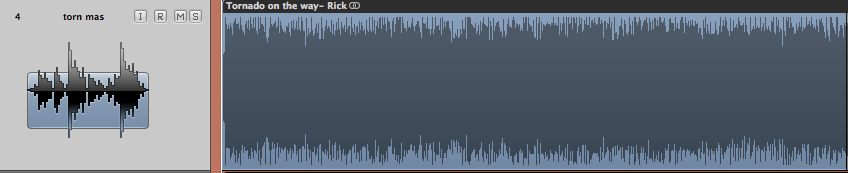
grafik6

https://soundcloud.com/techniques-mixasylum/blog-6-mastering-tornado-on-1

Please do take a look and listen to the un-mastered and mastered versions of these tracks. I hope they have conveyed that with some care and consideration how a good mix can turn into a fantastic master ready for distribution.

*All mastered and un-mastered tracks have been collated at the end of this blog so you can easily go between the two comparisons.

The Final Word

I hope this blog has gone some way to enlighten you to some of the techniques that can lead to an excellent sounding mastered song. Please try and remember that headroom is an incredibly important part of your mix, and try to ask yourself “has my mix got enough headroom for the mastering engineer?” before sending it to a paying engineer. Ask a friend/neighbour/housemate etc just to take a listen to your mix before you decide to send it, fresh ears always make a world of difference!!!

If you want to discuss anything about this blog, please feel free to get in touch with me via email at:

techniques-mixasylum@hotmail.co.uk or send a message through my facebook page at http://www.facebook.com/mixasylum

Any feedback is appreciated, good or bad, or even if you’ve got personal tips on how you prepare your mix before mastering, I’d love to hear from you.

Thanks, see you next time!

David Jones

Blog References 

Acosta, A., Carroll, J., Stamey, C. (2008) Interviews > Mastering Focus. [Internet]. Available from:        http://tapeop.com/interviews/68/mastering-focus/                     [Accessed: 11th December 2013]

Audio Examples

Here are today’s audio examples collated into one section so it is easier to compare the differences between the mixes. Thank you to the artistes for allowing me to showcase their material.

“Ghost Train” song by Bruce Niemchick https://www.facebook.com/bruceniemchick

Original Unmastered version:

https://soundcloud.com/techniques-mixasylum/blog-6-mastering-grace-train

Mastered version by Mix Asylum:

https://soundcloud.com/techniques-mixasylum/blog-6-mastering-grace-train-1

“Sands of Paradise” song by HURSH

https://soundcloud.com/dj-rash-sinfobia

Original Unmastered version:

https://soundcloud.com/techniques-mixasylum/blog-6-mastering-sands-of

Mastered version by Mix Asylum:

https://soundcloud.com/techniques-mixasylum/blog-6-mastering-sands-of-1

“Tornado on The Way” song by Rick Ivanoff

http://www.rickivanoff.com

Original Unmastered version:

https://soundcloud.com/techniques-mixasylum/blog-6-mastering-tornado-on

Mastered version by Mix Asylum:

https://soundcloud.com/techniques-mixasylum/blog-6-mastering-tornado-on-1

English · Tips

Understanding… Logic Pro’s Match EQ

Hello,

my name is David Jones and I am the founder and Producer for Mix Asylum a new post-production venture from the UK (http://www.mixasylum.co.uk). I’ve kindly been given permission by Sara Shirazi to write a number of guest blogs for Music2Deal and I hope you will find them useful. I am going to be talking about a range of software and techniques in future blogs, this first article being about Logic Pro’s “Match EQ” technique.

Where do I find “Match EQ?”

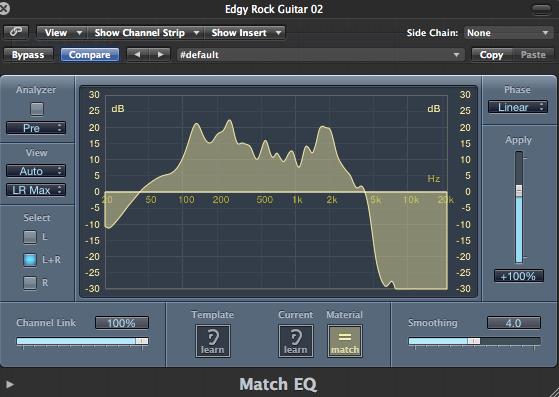
Match EQ is a process available in Logic Pro 9. It looks like this…

1grafik

…and is found in Logic via the following way:

2grafikFor this demonstration, I am using the “Edgy Rock Guitar 02” loop to show you the sound characteristics of Match EQ. Please take a listen to the audio link towards the bottom of the page so you can truly appreciate Match EQ:

What is “Match EQ?”

I’d first like to explore what Match EQ means to myself as a mixing engineer before a factual definition is applied.

Someone once said to me “Match EQ is for people who can’t EQ properly”. I think this is an unfair view of the process. I personally use Match EQ as a starting point on all of my mixes and would have difficulty without it. I use it as a tool to ‘sweep’ a soundsource(s) spectrum.

I do this so that I can hear what a source sounds like in extreme spectrums of EQ. When I talk about spectrum of EQ, I mean the lowest, bottom end frequency to the thinnest, high end frequency. Sometimes, I have a clear view in my minds eye of what I think a source should ‘sound’ like (whether it be a warm, low end definition, or a ‘sparkly’ high end tone) and I regularly use Match EQ to go to this idea first to see if my idea pays off. Sometimes I do get the right sound from mind to ear, but most times, Match EQ surprises and excites me with a sound I was not expecting, and it suddenly becomes a centre piece in a mix (where previously it might have been a subtle nuance).

Here is Apple’s description of Match EQ:

“Match EQ is a learning equalizer that analyzes the frequency spectrum of an audio signal such as an audio file, a channel strip input signal, or a template. The average frequency spectrum of the source file (the template) and of the current material (this can be the entire project or individual channel strips within it) is analyzed. These two spectra are then matched, creating a filter curve. This filter curve adapts the frequency response of the current material to match that of the template. Before applying the filter curve, you can modify it by boosting or cutting any number of frequencies, or by inverting the curve”.

[Apple Inc, no date].

I’ll discuss the ‘matching’ information shortly…

How do I use “Match EQ?”

The process of using Match EQ is incredibly simple, and works like this:

1. With the audio file you wish to process playing, press ‘Template Learn’

3grafik

2. The Audio file is now being processed by ‘Match EQ’

4grafik3. VERY IMPORTANT – ALWAYS stop the audio file playing, as the sound will now be altered to the deepest, lowest-end frequency and it is outputted at a very loud volume because of this. Your ears will thank you, believe me!!!!

4. With the audio file stopped playing, press ‘Match’

5grafik5. The EQ spectrum for the audio file is now outputted.

6grafik6. Manipulate the ‘Apply’ Lever to shape the sound of your source

7grafikThat really is all there is to it, now it’s up to your ears to do the hard work!

How is “Match EQ?” used to shape my mix?

Remember earlier when I mentioned about matching a sound source? If the above wasn’t already useful to your soundsources, Match EQ has a great trick that can really take your mix to the next level!

Say you’ve now got a perfect guitar shape/EQ tone that you want to use across your other guitars, but you don’t want the hassle of trying to exactly replicate the process just in case something goes wrong? No problem! Simply press ‘copy’ on your original Match EQ window, open a new Match EQ on your 2nd guitar (for example), press ‘paste’ and there you have it, an exact duplication of your settings.

You might now be saying “David, this is all well and good, but why would I want duplicates?” On guitar for example, it could be useful to form a ‘bed’ of guitar layers, and obviously having the same EQ tones would make them sound like a ‘wall’ for the mix.

Drums are also a very good use for Match EQ, sometimes I use different ‘tones’ to help shape my snare so that it has more realism of the bottom and top end of the hit. Kick drums also have more depth to them with Match EQ applied.

Basically, if you just want some consistency to a mix, look no further than Match EQ. Obviously, more processing may be needed on the signal as a whole for a full instrument mix, but it is a very useful and creative starting point that I wholeheartedly recommend.

Match EQ sound examples

Now I’ve discussed the principles of Match EQ, why don’t we have a listen to some of its sound shaping characteristics? Before that though, let me just explain how I set-up this demonstration.

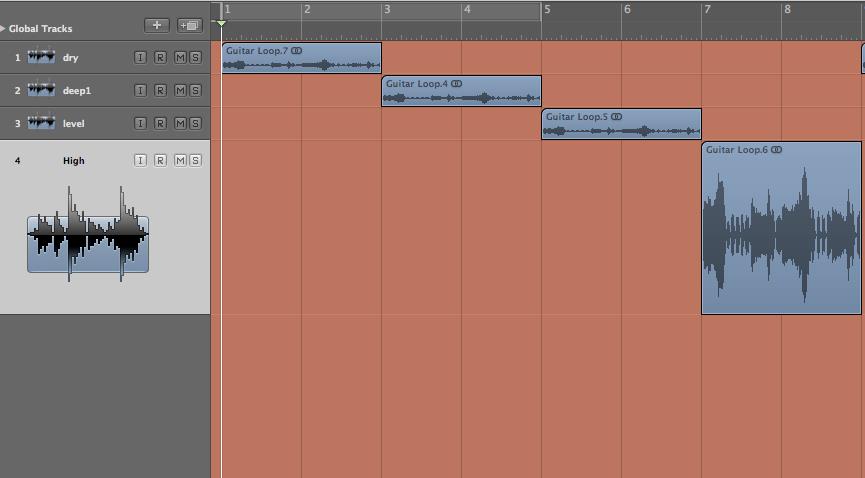
I imported the original dry, unprocessed “Edgy Rock Guitar 02” into Logic Pro 9, which by itself is a bar lasting for four seconds. I made three duplicate channels spaced equally apart (the dry loop starts at 0:00 – 0:04, a deeper EQ loop starts at 0:05 – 0:08 etc) and each three duplicates have a different EQ characteristic, as shown in these screenshots:

8grafikLoop 1 is unprocessed.

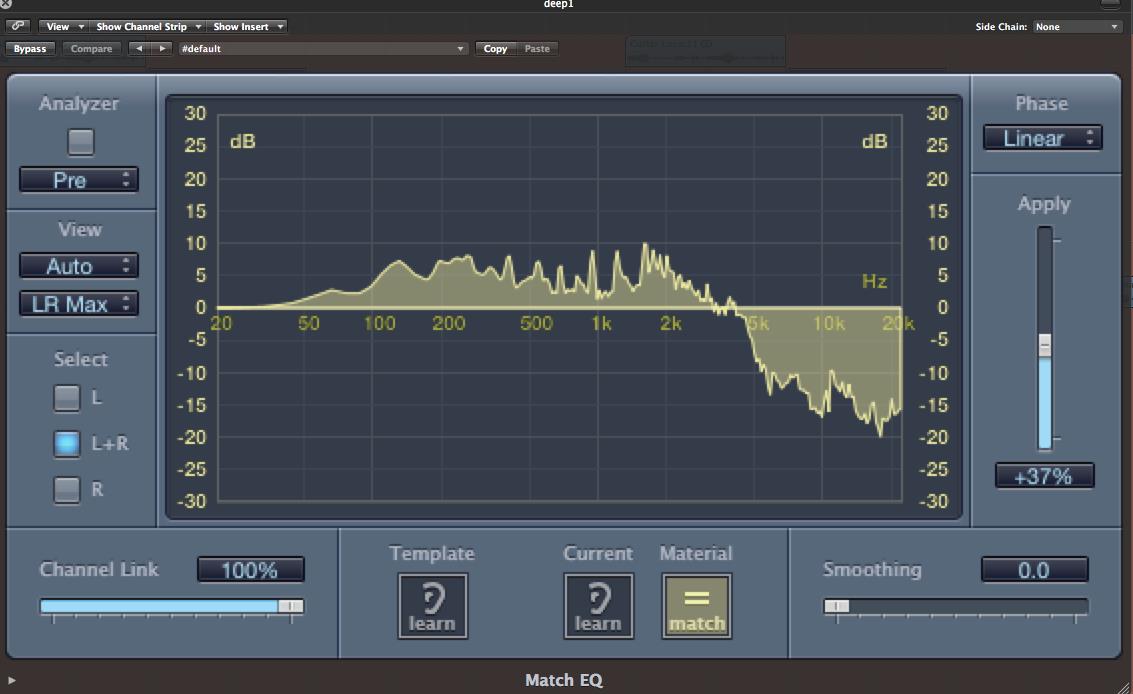
9grafikA deeper form of EQ for loop 2, enhancing more of the bass frequencies    around -15dB.

10grafikLoop 3 – This EQ setting has more of an even setting across the frequency spectrum, which means not one particular frequency band is prominent in the sound.

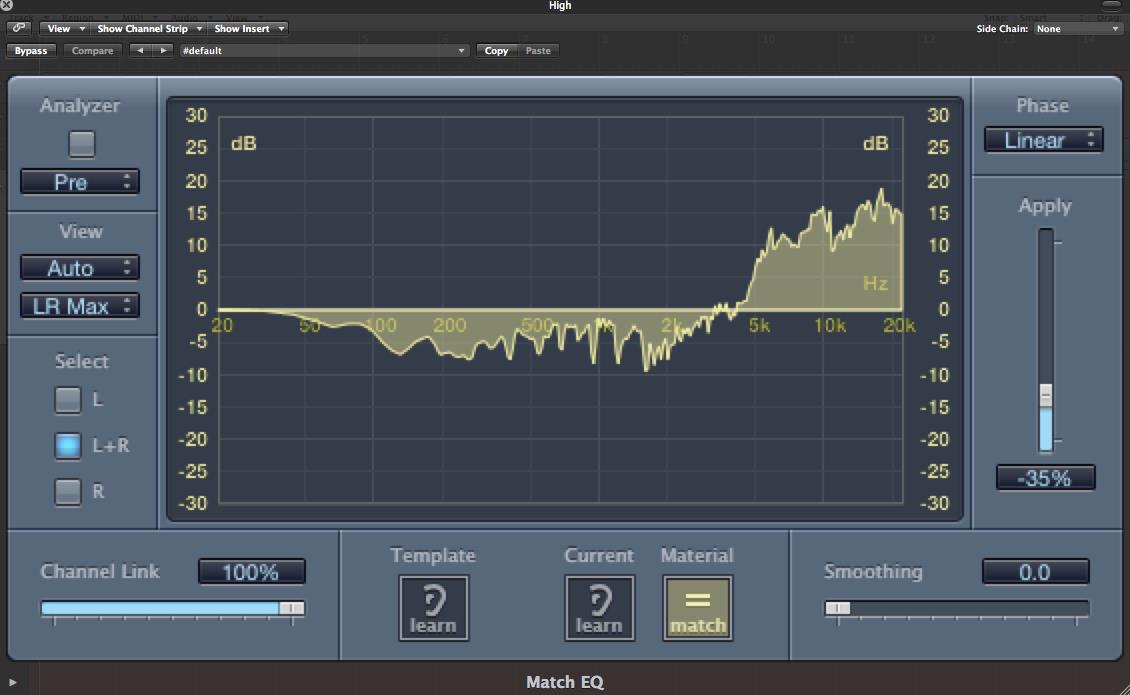
11grafikLoop 4 – The high frequencies of the guitar are now more prominent, giving the tone a ‘bright’ type of sound.

Each sample lasts for 0:04 seconds each, but I have duplicated these tracks three times, meaning the total playing time of the audio file is 0:49 seconds.

Please take a listen to the following demonstration of what Match EQ can do for your tracks!

https://soundcloud.com/techniques-mixasylum/match-eq-demonstration

The final word

I hope I’ve shown through the audio example above how much scope you can achieve on your soundsource through using Match EQ. In my eyes, it gives a user much more chance to experiment within the wider sound spectrum without necessarily altering the sound to cater for this at the recording stage, allowing your dry files to be just that – original files which can be further enriched at the mixing stage.

The sound examples are obviously taken from the extremes of the stereo spectrum for this example; the main focus for Match EQ is personal experimentation, there is no right or wrong way to EQ a particular sound, just let your imagination loose and see where it goes!

If you want to discuss anything about this blog, please feel free to get in touch with me via email at: techniques-mixasylum@hotmail.co.uk or send a message through my facebook page at http://www.facebook.com/mixasylum

Any feedback is appreciated, good or bad, or even if you’ve got personal tips on how you use Match EQ, I’d love to hear from you.

Also remember to check out my soundcloud for future demonstrations of production techniques:

https://soundcloud.com/techniques-mixasylum

Thanks, look out for my next blog!

David Jones

http://www.mixasylum.co.uk

English · Tips

The Greatest Lie Told This Generation

Lie._lies._lying

Article by Allen L. Johnston 

As I travel from city to city, country to country having speaking engagements at schools, universities and on conference & seminar panels, I have found that the current generation has one great misconception.

THE GAME IS TO BE SOLD AND NOT TOLD!

One popular school of thought is that the information on this industry is so valuable that it should be expensive to obtain.  This is a position easily taken by the many” seminar hustlers”, conference organizers and independent business owners with questionable practices who make a living on selling access.

These very same people now have a generation believing that the entire entertainment industry is built on service organizations & companies that care less about your project and more for your continuous monetary payment.  Their goal is to get you into a contract where you are paying for services that have little or no effect upon your career.

I want to tell you today about some changes that have occurred without notice within the music business.

  1. RELEASE DATE – Once upon a time this was a cherished word ultimately meaning that a date had been planned when your music would be released to the stores for sale. To make this happen there would be thousands of dollars spent in marketing plans, sales programs, advertising and salaries.  Tour expenses had been approved and the artist probably al ready had a major budget video shot with airplay and TV advertising run.

Today the Internet has made the term Release Date virtually disappear by offering direct access to the consumer.  Most independent artists are trying to get as many songs as possible in front of as many people as possible so they can start selling themselves doing shows, merchandise and anything else that can make them a living.  Sales programs have been regulated to the major 4 stores, Wal-Mart, K-Mart, Target & Best Buy and this doesn’t even take into consideration iTunes and the Internet.

  1. INDEPENDENT PROMOTER – This is a real lost to many within the recording industry.  Here were the Kings & Queens of the record business.  The people actually dealing directly with the radio station personnel and making the deals that would get records played, promoted on-air and eventually place the artist in the market doing a show.  A good record promoter could command a 6 figure salary for themselves and a 7 figure budget for the promotion of the product.  These were the Knights Templar of the recording business not only bringing airplay home to the major labels, but also being able to rectify problems between artists, labels and radio.

Consolidation, National & Regional consultants, corporate advertising and governmental politics made this job start to dry up.  Add onto that the unscrupulous individuals that take your money promise you a group of stations or an individual radio station and then find reasons to say that you are at fault for making the song NOT get played. The Independent promoter is now history totally ineffective at creating radio spins on any major chain of radio stations.

  1. RECORD POOL –Pools were created to receive music FREE from the record labels and charge the DJ’s to have access to the music.  As part of the service of being the mediator from streets to corporate the record pool had each one of its members give written feedback on every song that they attained.  For this the pool directors were treated royally by the record labels, given trips, free admission to conferences, and other perks.

This phrase has not disappeared but only morphed into something entirely different than its original context.   Now record pools charge the RECORD COMPANIES to place their music within the clubs of the specific membership.  Record pool directors and upper echelon pool personnel have become quasi-Independent promoters and are charging enormous fees to place music on radio mix shows and occasionally on the air for a limited time. (Make it or Break it)  This is really a travesty for many of these people have no business acumen, formal training or scruples.

  1. CHARTS – A sacred word among major label executives and a magical word for independent record companies.  Being on the charts meant that you were popular, making spectacular sales and probably had a record that was destined to give the artist the ability to perform in regional and national tours.  The bible of the Industry was Billboard with R&R running a close 2nd.

Chart position today is a farce at best, not signifying massive sales.  For example this week’s #1 album in the country sold 166,000 a far cry from the weekly sales of over 600,000 common just a few years ago.  The #5 record on the Billboard Top 200 albums chart only sold 55,000 and has a grand total of 551,749 for 18 weeks’ worth of sales.  I don’t even know anyone outside of a major company that evens subscribes to any of the trade magazines.  But even more critical is the concept that new artists still believe that if you are on the charts than you will get some type of preferential treatment within the entertainment industry.  There are now Chart Promoters that will take your money and promise you position on a major record chart, even though you don’t deserve anything.  Please don’t think that your record is the only “hyped” record on the charts and this helps make the charts useless

The other school of thought remains rooted with tradition and history claiming the industry information should be free so that our offspring’s can learn faster with greater knowledge and less mistakes.

The actual cost of information sharing is getting lower and lower all of the time.  Years ago you would have to find a conference or seminar to attend, pay your expenses, pay admission and then research the people that you wanted to meet just so you could sit with them and hear “first hand” the knowledge you desired.  Follow up phone calls, mailings, and physical trips kept you up to date and in tune with the industry.  Today all you have to do is pick up an electronic device, surf the web and immediately acquire information, contacts, knowledge and opportunities.

Information is readily available in many different countries and languages, what this generation seems to fail to recognize is the WISDOM to know right from wrong and the ability to interpret the information for their betterment.  Because you want someone to hear your music, pay you money, make you a career and all you do is perform, is the primary reason you are destined for failure.  Creating a true business environment that includes a plan for growth using multiple revenue streams is a path to long life.

Today I am telling you that this business model has changed entirely.

People are interacting with one another at an alarming rate, passing information, audio, video and business files around without any funds being transferred globally.  The ability to reach your customer directly is causing a new business model and governments plus private industry are adapting rapidly while many in the public sector continue the 1980’s practices.

Russia is now scanning, cataloguing and placing ALL of the books found in their library system online.  This is not only Russian literature, but English, French, German and more.  Africa, India, China and other third world countries within a few years will have major penetration on the World Wide Web allowing access to their collective banks of information and knowledge.  Effectively this will mean that the world’s knowledge will be OPEN to anyone that has an Internet connection for FREE.

We once knew that you had to have a distributor to sell your products.  We put up with paying distributors to ship, house, and even communicate with our companies.  We signed contracts with distributors allowing them to make advance money from our projects if they became a hit and were “picked up” by major labels.  This was what we accepted and allowed as normal business operation.

The world’s largest distributor of audio & video projects today is FACEBOOK.

In years past creativity was extraordinary, each individual writer, musician, singer, dancer, film maker, painter, designer and more worked on their craft and fashioned their distinctive individual style. A few collaborations were developed but for the majority of the entertainment products these collaborations were small (2-3person) units.

The majority of today’s creativity comes from the ability to hear, see and read ideas from other people globally.  We originally called it “sampling” or “biting” but now it is the way of education world wide. Most of what I write about comes from ideas already circulating on the web.  Being an avid reader I am in tune with many different people from different countries all speaking the same inferences.   We have become “people of the screen” and millions of followers are looking at their screens daily.  In todays market if you do not have a website, can be Google and have a positive social media score than you are not to be trusted or to do business with.  This is not my call, but the direction that society has taken.  If you see a person online with negative Google comments concerning their business or service, with no visible web presence or with dislikes (thumbs down) on their Facebook account you leave them alone.  The public has the power to make or unmake anyone just on the “thumbs up” rule.

The concept of Piracy has now changed into a new concept called Motivation meeting Opportunity.  If I have a copy of your movie and you decide that only the people that pay you should see it, then I now have an audience (MOTIVATION) that wants your product and since I have it available (OPPORTUNITY) I can send it to them for FREE.  A few readers just got mad, but this is file sharing at its lowest level and millions of people are doing it daily.  There is now an entire generation of teens and young adults that will always believe the Internet is the source of FREE information, video and music.

For years the idea of copyrights has bothered me, I know that it is an archaic regulation. I have only seen it work when you have money and power to use it   . I have watched the major labels, publishers, performing rights organizations and other groups make BILLIONS of dollars, Euros, yen, pounds, marks or whatever your countries currency is called based on copyright infringement regulations. Very few original songwriters or original publishers make a portion of the huge profit being generated by copyrights.  The Internet is changing the entire structure of copyright law worldwide, causing problems and many different fixes.

The new school of thought expands of the concept of “User Licenses” instead of mandatory copyright rules that the public ignores.  A user license is an agreement between the purchaser and the licensor for the right to use the product.  This makes so much more sense when dealing with the Internet and the download and uploading of files.  In particular the End User Licensing Agreement (EULA) is becoming more and more popular among originators of entertainment products worldwide.

Today’s business needs open communication between users for the flow of information to travel while the concept of keeping the information until you get paid is DEAD.  Many of you will continue to think in this antiquated way, as for me I’m opening up my business to interested people for FREE.  My open hand will receive more than your closed fist every day.  I never said that I won’t get paid, but I won’t wait to exchange information, files and business acumen on a perceived payday.