Interviews · music business · music industry interview · Music2Deal.com

Eurovision: why should songwriters care?

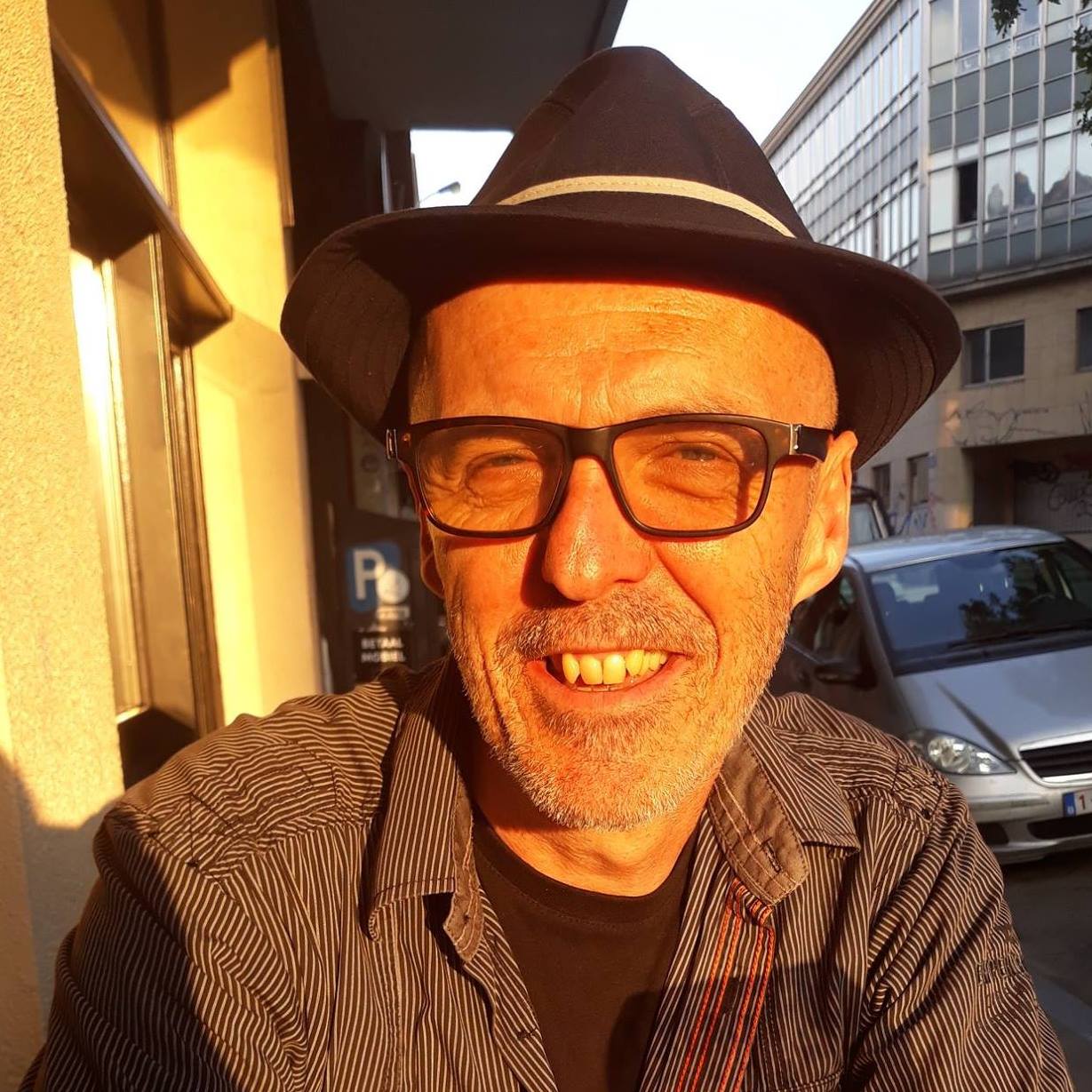
LeaHy is a songwriter, lyricist, and long-standing Music2Deal member with an international perspective on the music business. Over the years, he has written for acts such as 2 Unlimited and CB Milton and collaborated with various artists across Europe. With his deep knowledge of both the creative and business sides of music, LeaHy brings valuable insights into how songwriters can view opportunities like the Eurovision. In this interview, he shares his personal experience, perspectives, and advice for anyone curious about writing for one of the world’s biggest music stages.
You opened a forum on Music2Deal about the Eurovision. What prompted you?

Like many people my age, I have memories of watching the Eurovision as a family – at the time there were not many channels and so not much choice on TV.

Much later, I wrote for 2 Unlimited, CB Milton and others. So you could also say that I’m not scared of pop. I also submitted songs twice. Both fell at the first hurdle – no regrets. But the only people actually debating Eurovision are the hyperfans; songwriters don’t actually talk about Eurovision much.

That’s why I created the forum on Music2Deal (see below).

Who runs the Eurovision?

The Eurovision is run by the European Broadcasters Union – a body that manages supernational sports and TV events for its members, national TV stations. Any station can join, which explains why Australia, Israel and Turkiye are members and can participate and send in their candidates.

Question from a colleague: Why has Eurovision deteriorated so badly?

It’s worth talking about this. On the one hand, it you turn down the volume of your TV set, Eurovision has never been this good. The staging – and very often the choreographies – are among the best you will see anywhere in the world. Plus, the audience continues to grow.

But then there is the music. And that is more… complex. I wish more broadcasters would remember that it’s the Eurovision SONG contest. There is a very strong temptation for them to aim at the spectacle: larger-than-life singers; fake “catchy” choruses; and lots of flesh. So you get a lot of gimmicky acts. They definitely appeal to the live crowd, but they don’t build careers.

But that leads to another point: more than anything else, the Eurovision is a massive TV event whose job is to get people to turn the TV sets on. Their brief is not to create stars, and don’t forget that many of the performers are technically amateurs.

If you have the patience, there are nonetheless still some great songs and performances each year.

What does it take to write a Eurovision song?

Every year, you can see there are a bunch of people (and broadcasters) that figure it’s easy. Churning out music has never been that hard. Creating a potential hit is hard. My personal favourite of the past few years, “Tattoo” by Loreen (Sweden), had six writers, 30 musicians and one of the best vocalists in Europe. And there is not one note or word too many on the track. That’s your competition if you’re aiming for the top level.

There is much talk of the Eurovision formula. If I knew of one that worked, I’d create an app and sell it! One thing I would say that not many people talk about is that songs that catch people’s attention are often very authentic, for want of a better word. The storytelling aspect is important. This could be a “little guy just there for the laughs” to the sympathy vote for Ukraine or the block voting for Israel last year. If you can convince enough people that it’s important to you, a large number will follow you.

How much money can writers earn with Eurovision?
Let’s imagine that you get as far the semi-finals. By now you have earned a couple of thousand euros for airplay and streams. There’s a strong possibility that you will have spent far more than that on studios, session musicians, a good mix and haircuts 😉. Let’s say that you get to the finals and you get some moderate international airplay and streams. Then you’re looking at between €15-50,000. For top five finalists, think about €50-170,000. For the number one winner that goes on to catch people’s attention (not all of them do), you can start at €175,000 and the sky is the limit. As someone noted in other circumstances, “The winner takes it all”. Bear in mind that you will be sharing this money with the broadcaster and then dividing the rest between your co-writers.

How do I write for Eurovision?

As Eurovision is run by national TV stations, you’ll have to go through their submission process. Many require that all the writers and performers be from their country. Others require at least one person be from that country, while some do not specify any constraints.

Now for the reality check: an amazing 10,000 songs are submitted overall per year. Around 300 will make it to the local finals and some 30 or so will compete in the final finals.

The biggest countries obviously receive the most songs. So if you want to increase your chances mathematically, target smaller countries. But I really do recommend having some sort of local connection, be it a writer or a singer. If you get selected, check the contracts closely. Some will require that the writers and performers cover transport and other costs!

Whatever happens, take it as a learning experience and have fun. If you have a great song that needs lyrics, get in touch.

https://www.music2deal.com/groups/Eurovision

https://a-lyric.com
https://3hatsmusic.com
LeaHy´s Profil on Music2Deal

music business · Music Directory · Music2Deal.com

4 Music Pros You Should Know

From time to time, we spotlight remarkable music professionals from around the world. Whether you’re looking for production power, deep industry roots, or global connections — these are the people to know.

Roger Östman

A&R / Publisher – Stockholm, Sweden
With nearly 30 years in the music business, Roger has shaped careers through Voiceman Music and Mottowsoundz. His deep expertise in A&R and music publishing makes him an ideal contact for discovering and promoting new talent.
👉 View Roger’s profile on Music2Deal


Hellmut Wolf

Label Director – Wolf Entertainment (Germany, Australia, NZ)
As a composer, producer, and saxophonist, Hellmut leads an international label with offices on three continents. Wolf Entertainment is deeply connected with promoters, distributors, and corporate events worldwide.
👉 View Hellmut’s profile on Music2Deal


Tate Simms

Music Producer – Los Angeles, USA
Tate has toured with Christina Aguilera, George Benson, and Thelma Houston, among many others. As the head of Tate Simms Productions, he offers artist development, recording, and music for film & television across all genres.
👉 View Tate’s profile on Music2Deal


John Katana HSC

CEO, Showbiz Info Ltd / Band Leader – Nairobi, Kenya
John is the driving force behind Them Mushrooms, Kenya’s legendary band known for the hit Jambo Bwana (Hakuna Matata). Beyond performance, he’s a publisher, unionist, and award-winning music leader. He’s served on the boards of MCSK, RIKE, and Ke-MU, and was honored with the Head of State Commendation (HSC) for his contributions to Kenyan music.
👉 View John’s profile on Music2Deal


➡️ Want to grow your network and be featured?
Join Music2Deal — the exclusive business network with 18,000+ proven music professionals from around the world.
Whether you’re an artist, label, publisher, producer, or manager — create your profile, share your music offers, and discover new opportunities.
You could be next in our spotlight.

Interviews · music industry interview · Music2Deal.com

Interview with Lasse de Flon, the new representative for Music2Deal Scandinavia

Music2Deal: Lasse, you’re the exclusive representative for Music2Deal across
several Scandinavian countries. How do you feel about the
responsibility of handling multiple countries simultaneously?
Lasse: I have spent many years in various prominent positions within the music
industry across Scandinavia. Originally from Stockholm, Sweden, I resided and
worked there until 1988. Subsequently, I lived and worked in Oslo, Norway, for
11 years, and I have been based in Copenhagen, Denmark, since 1999. The late
Keith Flint once kindly called me the Scandinavian father in his distinctive Essex
accent.


Music2Deal: What brought you into the music industry? How did your journey
in this field begin?
Lasse: I began my musical career at an early age. My elder sisters & brothers pushed
my musical taste with The Beatles, The Rolling Stones, Simon & Garfunkel, Cat
Stevens…, and my mom & dad’s early Jazz from the ’40s and ’50s & ’60s. I was
brought up with a singing family playing various instruments.
Later I found my own musical taste and when disco, reggae & punk really took
off, in the ’70s, I started DJ’ing, at the age of 15, at our local youth club, and
later also played in various band constellations on my guitar that my sweetest
big brother bought and taught me about when I was 10. My journey continued
as I assisted bands on tour, maintained my DJ’ing in clubs, and worked in
record stores. In the vibrant 1990s, I launched a music distribution company
and was later recruited, along with ten others, to establish Playground Music
Scandinavia in 1999. From 1999 to 2002, I served as the Scandinavian Label
Manager for Mute Records UK, before founding my own company in
Copenhagen the same year.


Music2Deal: As both a music publisher and record label owner, could you
reveal some behind-the-scenes strategies for how you discover
new talent? What are the key things you look for?
Lasse: Initially, I focus on listening. Next, I assess the artist’s performance, considering
both their musical and visual presentation. This includes evaluating their
engagement in the social metaverse, as well as their audience and fanbase.
It’s intriguing to picture you in an office, identifying new talent.

Music2Deal:How do you operate in this role?
Lasse: I certainly look for great music daily throughout the entire musical spectre.
Often I receive great music by great artists too.

Music2Deal: So, am I right in imagining you working from an office while
managing the talent scouting?
Lasse: I use to have a proper office with a desk, posters and gold & platinum discs on
the wall, a huge record collection and a fancy listening department. The days of
traditional office settings are behind me; now, I can work from virtually
anywhere in the world using my powerhouse computer. With my headphones on, I engage in communication, marketing, promotion, distribution, licensing,
publishing, legal contracts, and all the other enjoyable tasks that come with my
role.

Music2Deal: How do you determine if something is fresh and current? What’s
your method for staying in tune with industry trends?
Lasse: I listen to my heart, really. I trust I can hear and feel what’s great and not. It has
to be genuine. All others are already too many.

Music2Deal: After your workday, do you head to the studio to continue making
music, or do you unwind in other ways?
Lasse: Sometimes I play my guitars or make music on my computer. I love making food,
drink good wine and play tennis too. I also study lots of other things in life from
the blockchain to vibrational Schumann resonance, and I have a deep
appreciation for music from diverse cultures, including jazz. As I grow older my
focus increasingly shifts towards the metaphysical aspects of existence.

Music2Deal: What advice would you offer artists on Music2Deal.com to help
them succeed in the music industry?
Lasse: I would ask them to work hard. Believe in what they do. Make them understand
that thing’s might take time but with great courage and strong beliefs they
might be able to live and work with what they love. And of course also share
the insights and resources I’ve gained from my extensive experience in music


Links

https://music2deal.com/scan/subexile

https://www.subexile.org